Friday, September 21, 2012

Visualising hexabenzocoronene

A few years ago, I wrote that we do not know how to draw ferrocene or a nitro group. (Still true.) Is the situation with polycyclic aromatic hydrocarbons any better?

Take hexabenzo[bc,ef,hi,kl,no,qr]coronene, one of the subjects of the single-molecule visualisation study published last week in Science [1]. One way to draw it shown in diagram (a):

(a)

I chose this one (out of many other possible Kekulé representations) because I can reproduce it on a paper napkin (beermat, Post-it note, you name it). If you look carefully, you will notice that the central ring and the six outermost rings are connected with single bonds.

(b)

Continuing the paper-napkin-doodle argument, it is even easier to draw a circle inside of each ring as in all-delocalised representation (b). However, that would not be a preferred diagram from IUPAC point of view [2, GR-6.5]: for example, benzene is acceptable but is preferred. Moreover, “it is generally not acceptable to use curves in two adjacent fused rings”. Still, I’d stick with circles.

The question is, do I have to draw a circle within each ring? Of course not. If I draw seven aromatic rings and connect the with single bonds as shown in (c), the resulting structure will be the same. In this way, I can even save some ink (graphite, chalk, etc.)

(c)

Without the circles, the six rings that surround the central ring in (c) start to look, well, more empty. Using the noncontact atomic force microscopy (NC-AFM), the team behind the study [1] were able to show (and in this case “to show” really means “to show”), that those rings are indeed slightly larger. The C—C bonds in the central ring (i-bonds, 1.417 Å) are 0.03 Å shorter than the bonds connecting that ring with the six outermost rings (j-bonds, 1.447 Å).

  1. Gross, L., Mohn, F., Moll, N., Schuler, B., Criado, A., Guitián, E., Peña, D., Gourdon, A. and Meyer, G. (2012) Bond-order discrimination by atomic force microscopy. Science 337, 1326—1329.
  2. Brecher, J. (2008) Graphical representation standards for chemical structure diagrams (IUPAC Recommendations 2008). Pure Appl. Chem. 80, 277—410.

Thursday, September 06, 2012

IUPAC periodic table?

The cover of the latest issue of Chemistry International features a fragment of Homenatge als elements (Hommage to the Elements) by the Catalan artist Eugènia Balcells. The display in the atrium of the Physics and Chemistry Library at the University of Barcelona takes the shape of the periodic table where each chemical element is represented by its emission spectrum [1]. According to the artist’s website, it “was born as a counterpoint” to the video installation Freqüències (Frequencies).

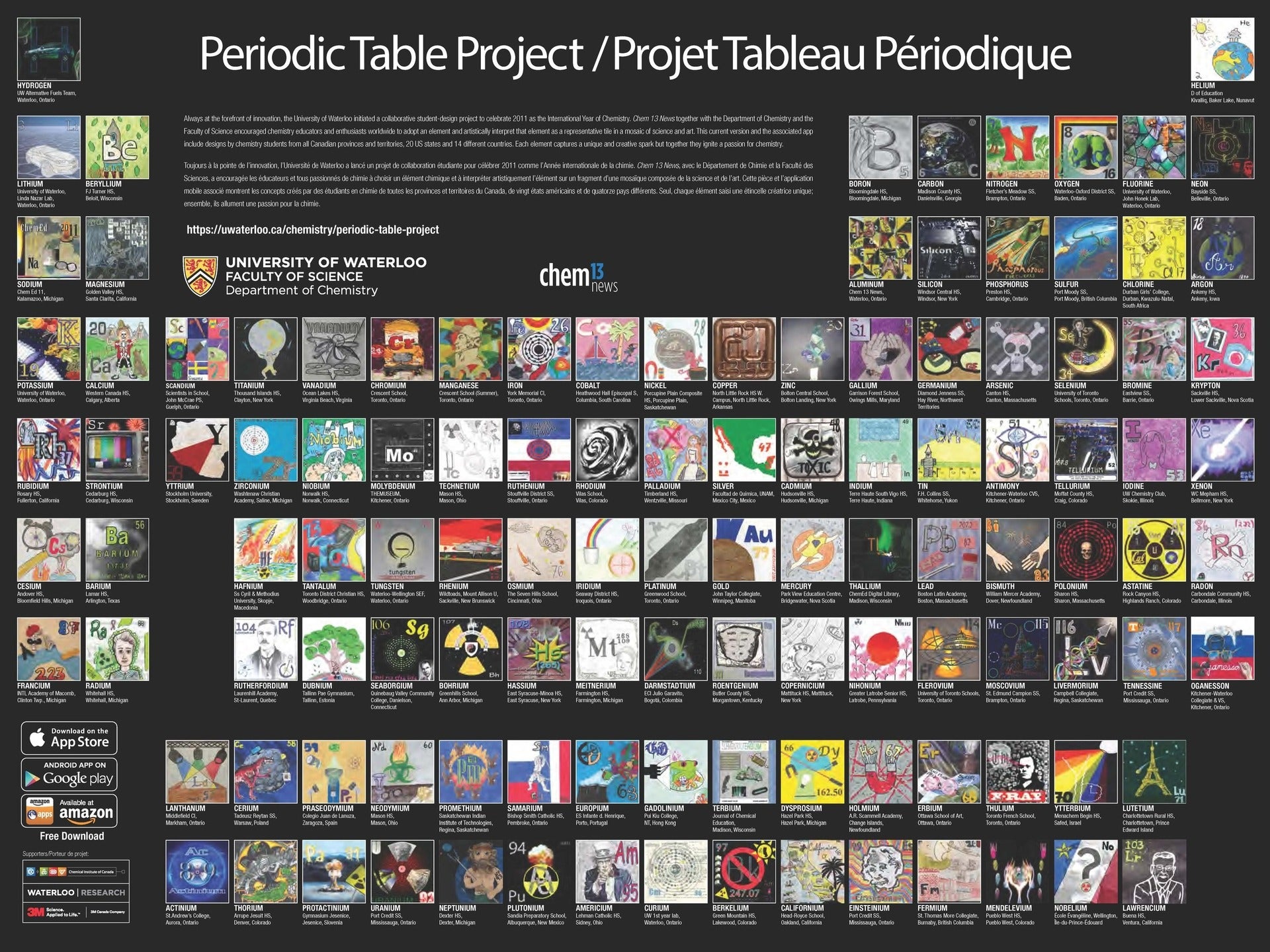
The Periodic Table Project at the University of Waterloo, Canada is another work of art,

designed by chemistry students from all Canadian provinces and territories, 20 U.S. states, and 14 countries. It can be viewed online and is available as a printed poster.

Also, as a free app for Apple or Android.

Periodic Table Project / Projet Tableau Périodique

Both the Periodic Table Project and Hommage to the Elements use the medium-long form periodic table. The “IUPAC Periodic Table of the Elements” as published at the back of Chemistry International (in this issue, for the first time it includes flerovium and livermorium) has the same shape. Why the quotes? Because, as a matter of fact, there is no such thing as IUPAC-approved periodic table. Jeffery Leigh wrote three years ago that “there is unlikely to be a definitive IUPAC-recommended form of the periodic table” [2]. In my humble opinion, this is unfortunate that IUPAC refuses to take a position on this matter. Eric Scerri takes a view that “IUPAC should in fact take a stance on the membership of particular groups even if this has not been the practice up to this point” [3]. To illustrate this point, he goes to address the Group 3 question. He argues that the most logical composition of this group is Sc, Y, Lu and Lr (rather than Sc, Y, La and Ac), as shown below.

1 2 3 4 5 6 7 8 9 10 11 12 13 14 15 16 17 18
H He
Li Be B C N O F Ne
Na Mg Al Si P S Cl Ar
K Ca Sc Ti V Cr Mn Fe Co Ni Cu Zn Ga Ge As Se Br Kr
Rb Sr Y Zr Nb Mo Tc Ru Rh Pd Ag Cd In Sn Sb Te I Xe
Cs Ba La Ce Pr Nd Pm Sm Eu Gd Tb Dy Ho Er Tm Yb Lu Hf Ta W Re Os Ir Pt Au Hg Tl Pb Bi Po At Rn
Fr Ra Ac Th Pa U Np Pu Am Cm Bk Cf Es Fm Md No Lr Rf Db Sg Bh Hs Mt Ds Rg Cn Nh Fl Mc Lv Ts Og
1 2 3 4 5 6 7 8 9 10 11 12 13 14 15 16 17 18 19 20 21 22 23 24 25 26 27 28 29 30 31 32
In addition to arranging all the elements in a more correct sequence of increasing atomic numbers, the decision to move to a long-form or 32-column table forces the periodic table designer towards just one possible option regarding the question of which elements to place in group 3.

I entirely agree with that. And yet Scerri stops short of proposing that IUPAC should support the 32-column (or “long, long form”, as Leigh put it) periodic table; in fact he explicitly states that he is not suggesting a change of IUPAC policy, viz. that of doing nothing about it. Why? That would be one of the most important and immediately noticeable changes sponsored by IUPAC in decades.

The problem is, sorting out the Group 3 does not resolve the problem how to number the f-block columns. If we stick with 18 groups (blue numbering on the top of the table), that would be really unfair towards the lanthanoids and actinoids. Why don’t we simply number groups from 1 to 32 (red numbers on the bottom of the table)? Sc, Y, Lu and Lr will find themselves in Group 17. So what? It’s not that many people will miss the current Group 17 — nobody really calls these elements anything but “halogens”. And 32 is even more convenient number than 18. I think it’s about time IUPAC took the lead and said how exactly the periodic table should look like.

  1. Alvarez, S. (2012) An artist’s hommage to the elements. Chemistry International 34, 5.
  2. Leigh, J. (2009) Periodic tables and IUPAC. Chemistry International 31, 4—6.
  3. Scerri, E. (2012) Mendeleev’s periodic table is finally completed and what to do about group 3? Chemistry International 34, 28—31.

Tuesday, August 21, 2012

P. aeruginosa bacterioferritin—ferredoxin complex

The X-ray crystal structure of Pseudomonas aeruginosa bacterioferritin (Pa-BfrB) in complex with bacterioferritin-associated ferredoxin (Pa-Bfd) has been solved at 2.0 Å resolution [1, 2].

As the first example of a ferritin-like molecule in complex with a cognate partner, the structure provides unprecedented insight into the complementary interface that enables the [2Fe-2S] cluster of Pa-Bfd to promote heme-mediated electron transfer through the BfrB protein dielectric (~18 Å), a process that is necessary to reduce the core ferric mineral and facilitate mobilization of Fe2+. The Pa-BfrB—Bfd complex also revealed the first structure of a Bfd, thus providing a first view to what appears to be a versatile metal binding domain ubiquitous to the large Fer2_BFD family of proteins and enzymes with diverse functions.
  1. Yao, H., Wang, Y., Lovell, S., Kumar, R., Ruvinsky, A.M., Battaile, K.P., Vakser, I.A. and Rivera, M. (2012) The structure of the BfrB—Bfd complex reveals protein—protein interactions enabling iron release from bacterioferritin. J. Am. Chem. Soc. 134, 13470—13481.
  2. PDB:4E6K

Friday, July 20, 2012

Crystal structure of HGbI

Hell’s Gate globin I from an obligate methanotroph Methylacidiphilum infernorum. Poetry.

  1. Teh, A.-H., Saito, J.A., Baharuddin, A., Tuckerman, J.R., Newhouse, J.S., Kanbe, M., Newhouse, E.I., Rahim, R.A., Favier, F., Didierjean, C., Sousa, E.H.S., Stott, M.B., Dunfield, P.F., Gonzalez, G., Gilles-Gonzalez, M.A., Najimudin, N. and Alam, M. (2011) Hell’s Gate globin I: An acid and thermostable bacterial hemoglobin resembling mammalian neuroglobin. FEBS Lett. 585, 3250—3258.
  2. Pechkova, E., Scudieri, D., Belmonte, L. and Nicolini, C. (2012) Oxygen-bound Hell’s gate globin I by classical versus LB nanotemplate method. J. Cell Biochem. 113, 2543—2548.
  3. PDB:3S1I
  4. PDB:3S1J
  5. PDB:3UBC
  6. PDB:3UBV

Friday, June 15, 2012

Polyoxomolybdate clusters of Mo/W-storage protein

Five years ago, Schemberg et al. reported the crystal structure of molybdenum/tungsten storage protein from Azotobacter vinelandii complexed with polyoxotungstates [1, 2].

Now Kowalewski et al. report the 1.6 Å X-ray structure of the same protein containing a variety of polyoxomolybdate clusters, from Mo3 to Mo8 [3].

Some N2-fixing bacteria prolong the functionality of nitrogenase in molybdenum starvation by a special Mo storage protein (MoSto) that can store more than 100 Mo atoms. The presented 1.6 Å X-ray structure of MoSto from Azotobacter vinelandii reveals various discrete polyoxomolybdate clusters, three covalently and three noncovalently bound Mo8, three Mo5–7, and one Mo3 clusters, and several low occupied, so far undefinable clusters, which are embedded in specific pockets inside a locked cage-shaped (αβ)3 protein complex. <...> The formed polyoxomolybdate clusters of MoSto, not detectable in bulk solvent, are the result of an interplay between self- and protein-driven assembly processes that unite inorganic supramolecular and protein chemistry in a host–guest system.
  1. Schemberg, J., Schneider, K., Demmer, U., Warkentin, E., Müller, A. and Ermler, U. (2007) Towards biological supramolecular chemistry: a variety of pocket-templated, individual metal oxide cluster nucleations in the cavity of a Mo/W-storage protein. Angewandte Chemie International Edition 46, 2408—2413.
  2. PDB:2OGX
  3. Kowalewski, B., Poppe, J., Demmer, U., Warkentin, E., Dierks, T., Ermler, U. and Schneider, K. (2012) Nature’s polyoxometalate chemistry: X-ray structure of the Mo storage protein loaded with discrete polynuclear Mo–O clusters. J. Am. Chem. Soc. 134, 9768—9774.

Thursday, May 10, 2012

P450-flavodoxin fusion enzyme XplA

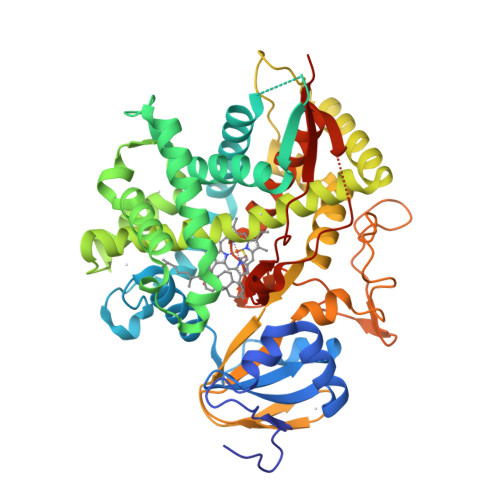
XplA is a P450-flavodoxin fusion enzyme that mediates the metabolism of the military explosive RDX (1,3,5-trinitro-1,3,5-triazinane) in Rhodococcus rhodochrous 11Y [1]. Bui et al. have conducted a detailed spectroscopic and crystallographic study of this unusual hemoflavoprotein [2, 3].

The XplA P450 has evolved as a reductase (rather than oxidase) of RDX and structural alterations to its heme- and FMN-binding domains have led to reduction potentials for low-spin heme iron Fe3+/Fe2+ and FMNSQ/HQ couples being much more positive than those seen in typical P450s and flavodoxins, but consistent with non-oxidative P450 catalysis. These evolutionary steps have also led to a constricted P450 active site with high affinity for RDX (but also for the small heterocyclic inhibitor imidazole), and also to substantially diminished affinity for FMN in the flavodoxin domain.

  1. Rylott, E.L., Jackson, R.G., Sabbadin, F., Seth-Smith, H.M.B., Edwards, J., Chong, C.S., Strand, S.E., Grogan, G. and Bruce, N.C. (2011) The explosive-degrading cytochrome P450 XplA: biochemistry, structural features and prospects for bioremediation. Biochim. Biophys. Acta 1814, 230—236.
  2. Bui, S.H., McLean, K.J., Cheesman, M.R., Bradley, J.M., Rigby, S.E.J., Levy, C.W., Leys, D. and Munro, A.W. (2012) Unusual spectroscopic and ligand binding properties of the cytochrome P450-flavodoxin fusion enzyme XplA. J. Biol. Chem. 287, 19699—19714.
  3. PDB:4EP6

Tuesday, April 24, 2012

Stachydrine demethylase

Crystal structures were determined for the Rieske-type monooxygenase, stachydrine demethylase, in the unliganded state (at 1.6 Å) and in the product complex (at 2.2 Å) [1—3].

  1. Daughtry, K.D., Xiao, Y., Stoner-Ma, D., Cho, E., Orville, A.M., Liu, P. and Allen, K.N. (2012) Quaternary ammonium oxidative demethylation: X-ray crystallographic, resonance Raman, and UV-visible spectroscopic analysis of a Rieske-type demethylase. J. Am. Chem. Soc. 134, 2823—2834.
  2. PDB:3VCA
  3. PDB:3VCP

Sunday, March 25, 2012

FAD/NADPH-domain of flavocytochrome P450 BM3

The crystal structure of the FAD/NADPH-binding domain of the Bacillus megaterium flavocytochrome P450 BM3 has been solved in both the absence and presence of the ligand NADP+ [1—3].

  1. Joyce, M.G., Ekanem, I.S., Roitel, O., Dunford, A.J., Neeli, R., Girvan, H.M., Baker, G.J., Curtis, R.A., Munro, A.W. and Leys, D. (2012) The crystal structure of the FAD/NADPH-binding domain of flavocytochrome P450 BM3. FEBS J. 279, 1694—1706.
  2. PDB:4DQK
  3. PDB:4DQL

Sunday, February 05, 2012

Carbon—carbon quadruple bond

Quadruple and higher order metal—metal bonds are known for transition metals, lanthanoids and actinoids. But for main group elements? Using four different computational methods, Shaik et al. [1] show that

C2 and its isoelectronic molecules CN+, BN and CB (each having eight valence electrons) are bound by a quadruple bond. The bonding comprises not only one σ- and two π-bonds, but also one weak ‘inverted’ bond, which can be characterized by the interaction of electrons in two outwardly pointing sp hybrid orbitals.
According to Shaik, the existence of the fourth bond in C2 suggests that it is not really diradical C22• [2]:
If C2 were a diradical it would immediately form higher clusters. I think the fact that you can isolate C2 tells you it has a barrier, small as it may be, to prevent that.
  1. Shaik, S., Danovich, D., Wu, W., Su, P., Rzepa, H.S. and Hiberty, P.C. Quadruple bonding in C2 and analogous eight-valence electron species. Nature Chemistry 4, 195—200.
  2. Extance, A. Calculations reveal carbon-carbon quadruple bond. Chemistry World, 29 January 2012.

Tuesday, December 06, 2011

Collaborative Computational Technologies for Biomedical Research

It’s been a while since I read a science/technology book from back to back. And was it worth it? Definitely.

The book is about collaboration and is a collaboration. Ironically, the best-written chapters almost invariably are those by single authors. Which confirms my own theory that writing (including scientific writing) is not exactly collaborative activity. The contributions by Robert Porter Lynch [1], Robin W. Spencer [2], Victor J. Hruby [3], Edward D. Zanders [4], Brian Pratt [5] and Keith T. Taylor [6] are especially worth noting — I wish the whole book was written at the level of these chapters. Then again, collaboration is always a compromise. The material presented here is diverse and heterogeneous — what did you expect?

I am sure there are people who do all sorts of stuff using their smartphones, including scientific database browsing and chemical structure drawing [7]. This latter activity does not strike me as especially productive or convenient. (Also, makes me glad that the use of mobile phones while driving is outlawed in most of Europe.) In my view, for the purposes of computer graphics bigger is better: if I had a choice, I’d go for HIPerWall (25,600 × 8000 pixels) or, better still, HIPerSpace (35,840 × 8000 pixels) display walls [8]. Then I could draw some really large (in many senses) molecules.

As much as I enjoy reading the real (hardcopy) book, it could be nice to see it online, preferably in open access. For instance, Chapter 25 [9] has 196 references, all of them are URLs, and some of them are rather long ones. I’d love to be able to click on them rather than type!

Will the wikis, virtual communities and cloud computing replace the behemoth pharma companies and NCBI? A man can dream. Ekins et al. write [10]:

As a result of the recent recession there is a lot of drug discovery and development talent available now due to company lay-offs. If the software or other tools to enable this workforce to be productive and collaborate were available and they participated in the existing scientific collaboration networks, then there may be potential for enormous breakthroughs.

I wish I could share the authors’ optimism. Yes there is potential, but it is highly unlikely that unemployed researchers are in the mood to collaborate. In case you wonder why: being unemployed is a full-time occupation, which leaves preciously little spare time. I rather inclined to agree with Robin W. Spencer [2]:

Especially for cutting-edge scientific challenges, the participants you need are probably well paid and not particularly enthused by another tee shirt, coffee cup, or $100 voucher.

More quotes from this book can be found here.

I use this opportunity to lament the decline of old-fashioned copy editing [11]. I get used to the lack of any such luxury in open access publications: if the paper is accepted, the publisher tends to keep all your typos intact. But when you buy a book from John Wiley & Sons for a hundred something bucks, you’d expect some editorial intervention. (To be honest, I did not buy it. I can’t afford buying books at such prices anyway.) The major and minor irritations include:

  • Typos: “chpater” instead of “chapter” (p. 281) — I thought by now the text editing software should take care of these.
  • Tautologies: ‘The institutes of the national Institutes of Health’ (p. 496); ‘... we need to consider standards specifically for chemistry and biology. In chemistry specifically...’ (p. 202).
  • Impenetrable sentences, e.g. ‘Many aspects should be considered, such as a regulatory path for filing, potential market size, differentiability of the therapeutic and experience with and difficulty to carry out clinical trials in the disease of interest’ (p. 252) or ‘This will only be done by drawing from the mental resources of an extended scientific community in an innovative and complex, yet “daily practice”, manner that promises a profound impact on our ability to use existing data to generate new knowledge with the maximum conceivable serendipity’ (p. 454). You what?
  • Overabundance of acronyms (have a look at p. 497 and you’ll see what I mean).
  • Overabundance of buzz-words of yesteryear: crowdsourcing (see below), integration, leveraging, paradigm, stakeholder and so on. The worst offenders, however, are clear and clearly. Clearly, when these words is used too often, it is clear that something is not quite clear.

Now for “crowdsourcing”: I find the term not only ugly but offensive. As a scientist (once a scientist, always a scientist), I am open to collaboration. Also, as a scientist, I detest being part of a crowd. Period.

Don’t get me wrong: it is a good book. I wouldn’t hesitate to recommend it to any decent scientific library. But it could have been a great book.

  1. Lynch, R.P. Collaborative innovation: essential foundation of scientific discovery. In: Ekins, S., Hupcey, M.A.Z. and Williams, A.J. (eds.) Collaborative Computational Technologies for Biomedical Research. John Wiley & Sons, Hoboken, 2011, pp. 19—37.
  2. Spencer, R.W. Consistent patterns in large-scale collaboration. Ibid., pp. 99—111.
  3. Hruby, V.J. Collaborations between chemists and biologists. Ibid., pp. 113—120.
  4. Zanders, E.D. Scientific networking and collaborations. Ibid., pp. 149—160.
  5. Pratt, B. Collaborative systems biology: open source, open data, and cloud computing. Ibid., pp. 209—220.
  6. Taylor, K.T. Evolution of electronic laboratory notebooks. Ibid., pp. 303—320.
  7. Williams, A.J., Arnold, R.J.G., Neylon, C., Spencer, R.W., Schürer, S. and Ekins, S. Current and future challenges for collaborative computational technologies for the life sciences. Ibid., pp. 491—517.
  8. He, Z., Ponto, K. and Kuester, F. Collaborative visual analytics environment for imaging genetics. Ibid., pp. 467—490.
  9. Bradley, J.-C., Lang, A.S.I.D., Koch, S. and Neylon, C. Collaboration using open notebook science in academia. Ibid., pp. 425—452.
  10. Ekins, S., Williams, A.J. and Hupcey, M.A.Z. Standards for collaborative computational technologies for biomedical research. Ibid., pp. 201—208.
  11. Clark, A. The lost art of editing. The Guardian, 11 February 2011.

Wednesday, November 23, 2011

Kilogram, pterin, selenium

I really enjoyed the latest issue of Chemistry International. Did you know that pterin is called “pterin” because it was first isolated from butterfly wings, and folic acid is “folic” because it was first found in leafy vegetables (from Latin folium)? I just learned that from Edward Taylor’s illuminating article on Alimta [1].

Next, two papers on kilogram in the “New SI”. Currently, kilogram is defined as a unit of mass equal to mass of the international prototype kilogram (IPK), which is a cylinder made of 90% platinum—10% iridium alloy kept at the International Bureau of Weights and Measures in France. The problem is, IPK is losing mass! But even if it did not, it is still not good that one of SI base units is linked to an artifact rather than to something more fundamental. The chemist in me prefers the definition of kilo based on carbon-12 mass [2] to the one based on Planck constant [3].

Finally, essay by Jan Trofast on discovery of selenium [4]. I didn’t know that Swedes discovered so many elements!

  1. Taylor, E.C. (2011) From the wings of butterflies: The discovery and synthesis of Alimta. Chemistry International 33, 4—8.
  2. Censullo, A.C., Hill, T.P. and Miller, J. (2011) Part I — From the current “kilogram problem” to a proposed definition. Chemistry International 33, 9—12.
  3. Mills, I. (2011) Part II — Explicit-constant definitions for the kilogram and for the mole. Chemistry International 33, 12—15.
  4. Trofast, J. (2011) Berzelius’ discovery of selenium. Chemistry International 33, 16—19.

Friday, October 07, 2011

Icosahedrite

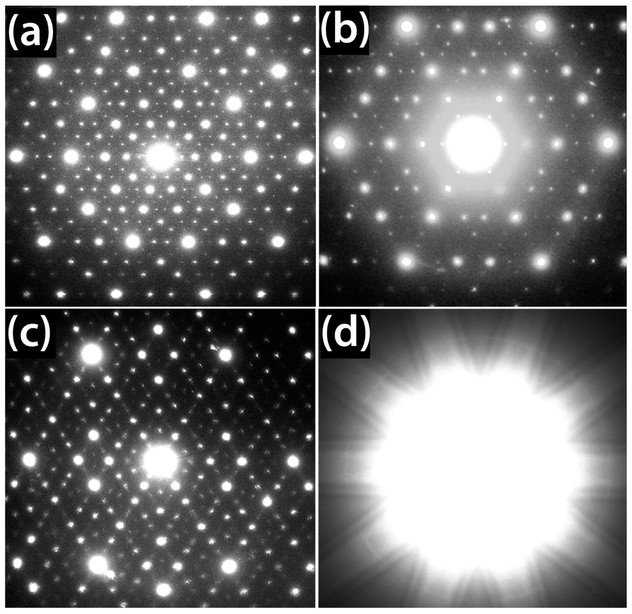
In 1982, Dan Shechtman observed unusual diffraction pattern in aluminium—manganese alloy [1, 2]. Almost 30 years later, he was awarded The Nobel Prize in Chemistry 2011for the discovery of quasicrystals”.

Earlier this year, the first naturally occurring quasicrystal was described. Icosahedrite Al63Cu24Fe13 is a new mineral found in southeastern Chukhotka, Russia. It is named “for the icosahedral symmetry of its internal atomic structure, as observed in its diffraction pattern” [3].

  1. Shechtman, D., Blech, I., Gratias, D. and Cahn, J. (1984) Metallic phase with long-range orientational order and no translational symmetry. Physical Review Letters 53, 1951—1953.
  2. Fernholm, A. (2011) Crystals of golden proportions. Nobelprize.org.
  3. Bindi, L., Steinhardt, P.J., Yao, N. and Lu, P.J. (2011) Icosahedrite, Al63Cu24Fe13, the first natural quasicrystal. American Mineralogist 96, 928—931.

Sunday, September 25, 2011

Do we need the terminal e?

Chemical English, after all, is just a subset of English. As such, it suffers the same problem as English in general: the pronunciation of the words is far from obvious. What makes it worse for chemistry is absence of any authoritative pronunciation guide. (Since the last year’s post on this topic, the audio guide “Pronunciation of Chemical Terms”, originally hosted by Hong Kong Cyber Campus, has disappeared from the web.)

You’d think that the chemical terminology was developed after the Great Vowel Shift and therefore there must be less of gap between the spoken and written word. You’d be wrong. The gap is there, a-gaping.

For instance, the effect of silent terminal e on pronunciation of English words, including chemical terms, is simply unpredictable. Sometimes the terminal e makes no difference: both thiamine and thiamin are pronounced and mean the same. (Cf. “win” and “wine”.) In some other cases, it makes a lot of difference: chlorine (chemical element number 17) and chlorin (tetrapyrrole), or silicon (chemical element number 14) and silicone (a class of silicon-containing polymers).

Protein vs cysteine; cisplatin vs astatine; krypton vs ketone; phenol vs pyrrole — what is the point of terminal es? Wouldn’t we all be better off without them? That will spare us a few rules about elision of terminal vowels, for example.

Saturday, August 13, 2011

Sometimes metal just plain rusts

Our stainless steel forks and knives, which in England were literally stainless, even spotless, for years, here on Fuerteventura developed rust stains in a matter of days. What’s the matter?

I found this lovely quote from Brion Toss’s book [1]:

Sometimes metal just plain rusts. Stainless steel rusts more slowly, but tropical climates will get to it in just a few years. Galvanized steel left untended can dissolve in a matter of months.

Well said, but what exactly is wrong with “tropical climates”? High humidity and high temperature, that’s what.

But wait. Humidity in Fuerteventura is not higher than in England, right? We hardly have any rain on this island. But the temperature is definitely higher. As is the case with most chemical reactions, the corrosion rate increases with increasing temperature. Add to this salt air. (Salt acts as a catalyst of rusting.) No wonder cars rust quickly here.

Ah well, we always can use the chopsticks.

  1. Toss, B. (1998) The Complete Rigger’s Apprentice: Tools and Techniques for Modern and Traditional Rigging. International Marine/Ragged Mountain Press, Camden, Maine.

Friday, July 29, 2011

Thursday, July 28, 2011

Phe—Val crosslink in symerythrin

The crystal structure of diiron protein symerythrin from Cyanophora paradoxa reveals a novel C—C cross-link between valine and phenylalanine residues [1].

  1. Cooley, R.B., Rhoads, T.W., Arp, D.J. and Karplus, P.A. (2011) A diiron protein autogenerates a valine-phenylalanine cross-link. Science 332, 929.

Saturday, June 18, 2011

Open and closed P450 2B4

The crystal structures of rabbit P450 2B4 covalently bound to the mechanism-based inactivator 4-tert-butylphenylacetylene in closed (a) and open (b) conformations have been solved [1].


(a)

(b)

  1. Gay, S.C., Zhang, H., Wilderman, P.R., Roberts, A.G., Liu, T., Li, S., Lin, H.-l., Zhang, Q., Woods, V.L., Jr., Stout, C.D., Hollenberg, P.F. and Halpert, J.R. (2011) Structural analysis of mammalian cytochrome P450 2B4 covalently bound to the mechanism-based inactivator tert-butylphenylacetylene: insight into partial enzymatic activity. Biochemistry 50, 4903—4911.

Tuesday, April 26, 2011

Importance of being obsessive-compulsive

Never underestimate the importance of naming. For instance, I would probably never read the excellent paper by Kuhn and Wahl-Jensen [1] if not for its title. (Seriously, read it. Although the note appears in Binomina, it is relevant to scientific nomenclature and terminology in general, not just biological taxonomy.) They write:

When terms get renamed just for the sake of renaming them then outrage at nomenclature experts is justified. But it is a two-way street. Nomenclature without discourse with the scientific community working in laboratories is useless — but science without nomenclature cannot be performed, either.

Conversely, Roderic Page argues that “quite a lot” of biology can be performed without “proper” taxonomic names [2], even though his

definition of “proper” name is a little loose: anything that had two words, second one starting with a lower case letter, was treated as a proper name.

Just imagine the fury of those who are “obsessive-compulsive about terminology” on reading that! Surely not any binomial name is “proper”? However, that is beyond the point. Linnaean names are just labels. They may be preferable to NCBI tax_id codes because of aesthetic considerations but ultimately they are dispensable. We only cling to them because we believe that these labels have, as Robert M. Pirsig put it, “an intrinsic sacredness” of their own [3]:

One finds that in the Judeo-Christian culture in which the Old Testament ‘Word’ had an intrinsic sacredness of its own, men are willing to sacrifice and live by and die for words.

But what about chemistry? On the one hand, chemistry appears to be in a better position because of superiority of chemical nomenclature over, well, any other known nomenclature. The name constructed according to the rules of systematic chemical nomenclature holds the key to the structure of the entity in question. It does not mean that there could or should be only one “proper” name for one structure. For example, “tetrafluoridolead” (additive nomenclature) and “tetrafluoroplumbane” (substitutive nomenclature) correspond to the same entity, PbF4. You don’t have to know it, because you can figure it out. Compare this with the situation in biology: there is no way to deduce that, say, Prunus dulcis and Amygdalus communis are synonyms.

On the other hand, we chemists often fall into the same trap as anyone else: we tend to believe that “proper” naming of a compound (of known structure) automatically improves our knowledge of it. But why? The terms can change. The nomenclature rules are changing. For a structure of certain complexity, the application of the same rules by different chemists (or different naming software) may result in different systematic names. Some structures as yet cannot be named by any software. So what? It is highly unlikely that a name which takes more than 100 characters will be used in any discourse. I distinctly remember thinking about it a few years ago while reading the draft of IUPAC Recommendations for rotaxane nomenclature [4]. Why not to use the (equally unpronounceable but more useful) InChI string instead?

Still, I wouldn’t dismiss the aesthetics that easily. For me, concise, clear, elegant is good; long, ambiguous, ugly is bad. And coming back to the title of [1]: “being obsessive-compulsive about terminology and nomenclature” is neither a vice nor a virtue. It is a mental condition that some people (myself included) have, for better or for worse.

  1. Kuhn, J.H. and Wahl-Jensen, V. (2010) Being obsessive-compulsive about terminology and nomenclature is not a vice, but a virtue. Bionomina 1: 11—14.
  2. Page, R. (2011) Dark taxa: GenBank in a post-taxonomic world.
  3. Pirsig, R.M. (1974) Zen and the Art of Motorcycle Maintenance.
  4. Yerin, A., Wilks, E.S., Moss, G.P. and Harada, A. (2008) Nomenclature for rotaxanes and pseudorotaxanes (IUPAC Recommendations 2008). Pure Appl. Chem. 80, 2041—2068.

Friday, April 08, 2011

Amethyst

Last Summer, we bought this crystal-growing kit in Oxfam. It contains ingredients and instructions to grow several types of crystals. Those nicknamed “quartz” and “emerald” in fact are monoammonium phosphate, NH4H2PO4, while “amethyst” and “fluorite” are grown from a solution of potassium aluminium sulphate, KAl(SO4)2. Our latest experiment was to grow an “amethyst” crystal cluster. Timur and I prepared the solution, poured it over two stones from our garden and left to grow for a week. Here’s the result.

Tuesday, March 22, 2011

Chlorite dismutase

Photosynthesis is not the only dioxygen-evolving biological process. For instance, chlorite dismutase (Cld; EC 1.13.11.49) catalyses the production of O2 from chlorite (1):

ClO2 → Cl + O2(1)

The reaction (1) is not really disproportionation, and NC-IUBMB made a valid point that the term “chlorite dismutase” is “misleading”. Even so, the NC-IUBMB-approved, sorry, “accepted” name “chlorite O2-lyase” for an oxidoreductase is equally absurd; I am going to ignore it.

Chlorite dismutase from Azospira oryzae exists as a homohexamer [1] while Cld from Dechloromonas aromatica [2] and enzyme from Candidatus Nitrospira defluvii [3] are homopentamers.

The active site contains a single haem group [Fe(ppIX)] coordinated by a proximal histidine residue. Goblirsch et al. [2] propose the mechanism where the reaction of chlorite within the distal pocket of Cld generates hypochlorite (ClO) and a compound I intermediate [Fe(ppIX)O] (1a). Then ClO rebounds with compound I forming the chloride and dioxygen (1b):

ClO2 + [Fe(ppIX)] → ClO + [Fe(ppIX)O](1a)
ClO + [Fe(ppIX)O] → Cl + O2 + [Fe(ppIX)](1b)
  1. de Geus, D.C., Thomassen, E.A.J., Hagedoorn, P.-L., Pannu, N.S., van Duijn, E. and Abrahams, J.P. (2009) Crystal structure of chlorite dismutase, a detoxifying enzyme producing molecular oxygen. J. Mol. Biol. 387, 192—206.
  2. Goblirsch, B.R., Streit, B.R., DuBois, J.L. and Wilmot, C.W. (2010) Structural features promoting dioxygen production by Dechloromonas aromatica chlorite dismutase. J. Biol. Inorg. Chem. 15, 879—888.
  3. Kostan, J., Sjöblom, B., Maixner, F., Mlynek, G., Furtmüller, P.G., Obinger, C., Wagner, M., Daims, H. and Djinović-Carugo, K. (2010) Structural and functional characterisation of the chlorite dismutase from the nitrite-oxidizing bacterium “Candidatus Nitrospira defluvii”: Identification of a catalytically important amino acid residue. J. Struct. Biol. 172, 331—342.