Wednesday, May 27, 2020

Binary-type, extended

Binary-type nomenclature can be extended beyond simple stoichiometric names. Let’s have a look at the compound with empirical formula HKO. If we were trying to come up with purely stoichiometric name, it would be either potassium hydride oxide or hydrogen potassium oxide, but nobody calls it that. Moreover, it is customary to write its formula not like I did (with element symbols ordered alphabetically), but KOH. Why? Because it is known that KOH is an ionic compound which will dissociate in water into cations K+ and anions OH. Attention please: we have just zoomed from (macroscopic) compound to (microscopic) molecular entities.

So we’ve got some extra structural information, viz. that the anion is composed of oxygen and hydrogen. The anion OH is known as hydroxide and thus our compound is named potassium hydroxide.

Likewise, it is known that NH4NO3 dissociates into cations NH4+ and anions NO3. The NH4+ cation is known as ammonium and the NO3 anion as nitrate so our compound is is named ammonium nitrate.

Tuesday, May 19, 2020

Stoichiometric names

The Red Book [1, p. 5] uses the term compositional nomenclature

to denote name constructions which are based solely on the composition of the substances or species being named, as opposed to systems involving structural information.

It is the simplest systematic way of naming chemical substances. Compositional nomenclature can be used for both compounds and elementary substances. In case of compounds, is is also known as binary-type nomenclature [2]. Why “binary”? Because the names of compounds named that way always consist of two parts, positive and negative.

Wednesday, May 13, 2020

What are compounds anyway?

According to Oxford English Dictionary, “compound” (in chemistry) is

a substance formed from two or more elements chemically united in fixed proportions.
(1)

I quite like this definition. There are four statements in it:

  • compound is a substance (therefore, it is macroscopic);
  • compound contains at least two (different) elements;
  • these elements are “chemically united”, i.e. chemically bound;
  • they are bound in fixed proportions.

Thursday, December 21, 2017

Elemental haiku

My, the year is almost gone and I, busy with other stuff, didn’t publish a single post. Luckily, I came across Elemental haiku — a periodic table of haikus, one per element, plus one for a hypothetical element 119. Here are my favourites.

2. Helium

Begin universe.
Wait three minutes to enter.
Stay cool. Don’t react.

11. Sodium

Racing to trigger
every kiss, every kind act;
behind every thought.

13. Aluminum/Aluminium

Spent kindergarten
endlessly writing your name.
One i or two i’s?

26. Iron

Anvil, axe, nail, plow,
engine, railway, factory.
Servant, friend, partner.

30. Zinc

Clasp your neighbor tight.
Sound the music while you dance,
trumpet, bugle, horn.

39. Yttrium

That is not a name.
That is a spelling error.
Or a Scrabble bluff.

67. Holmium

The root of the name
elementary, my dear.
Stockholm, not Sherlock.

80. Mercury

Madness the price paid
for your molten alchemy.
Metal. Planet. God.
You can contribute your own on Twitter with hashtag #ChemHaiku.

Thursday, December 22, 2016

Cork polycyclic aromatic hydrocarbons

In the spirit of both Christmas and recycling, I decided to build a Christmas tree by gluing together wine corks accumulated during this year. In addition, if you needed one, the intermediates of this process make rather cute models of polycyclic aromatic hydrocarbons.

(a) benzene

Tuesday, December 06, 2016

An electron wire in formylmethanofuran dehydrogenase

The first step of biological methane formation from carbon dioxide is the reduction of CO2 to form N-formylmethanofuran from methanofuran. This reaction is catalysed by formylmethanofuran dehydrogenase (EC 1.2.99.5). There are two types of this enzyme in methanogenic archaea, a tungsten iron—sulphur protein (Fwd) and a molybdenum iron—sulphur protein (Fmd).

Wagner et al. [1] determined the X-ray structures of a Fwd enzyme from the thermophilic methanogenic archaeon Methanothermobacter wolfeii in several crystal forms [2—4]. To any bioinorganic chemist this metalloprotein should look like a treasure trove: every FwdABCDFG heterohexamer has got a mononuclear tungsten centre, a dinuclear zinc centre, and quite a few iron—sulphur clusters. The enzyme exists as either a dimer or a tetramer of the FwdABCDFG heterohexamers. The authors suggest that the 24-meric complex (FwdABCDFG)4 is a physiologically active form. It contains 46 (yes, forty-six) [Fe4S4] clusters which form an electron wire between the redox-active tungsten centres. The function of this wire remains unclear though.

  1. Wagner, T., Ermler, U. and Shima, S. (2016) The methanogenic CO2 reducing-and-fixing enzyme is bifunctional and contains 46 [4Fe-4S] clusters. Science 354, 114—117.
  2. PDB:5T5I
  3. PDB:5T5M
  4. PDB:5T61

Sunday, July 31, 2016

A Guide to Psychoactive Plants

Humans were consuming, growing and trading (in this order) the psychoactive plants and derived substances since time immemorial. Most governments tried (and failed) to control and restrict them. Without these plants, not only pharmacology as we know it would not exist, but the whole human history would be completely different. Surely Guía de las plantas psicoactivas by Dr. Josep Lluís Berdonces i Serra [1], published by Ediciones Invisibles (I am not joking) is not the first and not the last book dealing with this topic. Why would we need another one? That’s exactly the question Jonathan Ott, the author of classic Pharmacotheon [2], asks (and answers) in the preface, which also mentions such classics as Plants of the Gods [3] and The Encyclopedia of Psychoactive Plants [4]. As for me, I just saw this beautifully illustrated book on display in the library and felt compelled to borrow it. It is written in a lively, easy-to-read Spanish. For such a relatively slim volume (333 pages including appendices and index), it’s surprisingly informative. I learned that...

It also contains a short chapter on psychoactive fungi and another one on pharmacology of principal active compounds, including (o joy!) their structural formulae. Perhaps inevitably, there are some omissions (which I hope will be addressed in the subsequent editions). For example, Guía dedicates enough space to coffee and kola, but where is tea? To fix that oversight, we’ve published our own short guide to psychoactive plants illustrated by Tamara Kulikova.

In Dr Ott’s view, this book “viene a expandir nuestros horizontes” (came to expand our horizons) — without the necessary consumption of its protagonists. With a cup of tea, maybe.

  1. Berdonces i Serra, J.L. (2015) Guía de las plantas psicoactivas: Historia, usos y aplicaciones. Ediciones Invisibles, Barcelona (ISBN 978-84-944195-4-6).
  2. Ott, J. (1993) Pharmacotheon: Entheogenic Drugs, Their Plant Sources and History. Natural Products Company.
  3. Schultes, R.E., Hofmann, A. and Rätsch, C. (2005) Plants of the Gods: Their Sacred, Healing, and Hallucinogenic Powers, 2nd Ed., Healing Arts Press, Rochester.
  4. Rätsch, C. (2005) The Encyclopedia of Psychoactive Plants: Ethnopharmacology and Its Applications, Park Street Press, Rochester.

Thursday, June 16, 2016

The end of unun*iums is announced

So that’s it, then. Four new elements, ununtrium, ununpentium, ununseptium and ununoctium [1] are to be officially named nihonium (symbol Nh), moscovium (Mc), tennessine (Ts), and oganesson (Og), respectively [2]. So that for a while the periodic table will be free of ungainly “unun” names. The provisional recommendation is out [3], comments by 8 November 2016. I am going to send mine to IUPAC, but I’d like to share them with my readers first.

Let’s start with naming conventions [4]:

In keeping with tradition, elements are named after:
  1. a mythological concept or character (including an astronomical object),
  2. a mineral, or similar substance,
  3. a place, or geographical region,
  4. a property of the element, or
  5. a scientist.
Unfortunately, it is not required for the names to be aesthetically pleasing.

In absence of minerals (all four elements are artificial) and properties (apart from half-lives, which aren’t that long) to speak about, we are left with three options. Don’t you agree that the option (a) is the most interesting one? However, the discoverers have chosen easy and boring options (c) and (e). Well, I like nihonium, named after Nihon (ニホン), one of the Japanese names for Japan (literally, “the sun’s origin”). I can’t say the same about the rest.

Take moscovium:

It is proposed that the name moscovium and symbol Mc are given to element 115. Moscovium is recommended in recognition of the Moscow region and honoring the ancient Russian land that is home to the Joint Institute for Nuclear Research, where the discovery experiments were conducted using the Dubna Gas-Filled Recoil Separator in combination with the heavy-ion accelerator capabilities of the Flerov Laboratory of Nuclear Reactions, JINR.
I see. Not content with dubnium (element 105), Russian scientists™ insist on honouring Dubna one more time. But Dubna is not Moscow. The town is at least as old as the Russian capital and is situated on the very edge of Moscow Oblast, or Podmoskovye (Подмосковье). Shouldn’t dubnium 2.0 be called podmoskovium then? And why mention Moscow at all? After all, there are four elements named after Ytterby. The variations like dubinium, dubonium, or poddubnium spring to mind. Needless to say, “Mc” will have to go.

Personally, I would prefer the element 115 to be named lemmium in honour of the late Motörhead frontman Lemmy Kilmister. Alas, IUPAC’s set of absurd rules (see above) restricts people after whom the new elements could be named to “scientists”. I’ll come to that in a minute.

Now let’s look at tennessine. The ending -ine, by analogy with English names of other halogens, appears to be natural. However it simply shows that the authors of this proposal (from Tennessee region, I guess) did not think about languages other than English, although they should have, for “the names for new chemical elements in English should allow proper translation into other major languages” [3]. For instance, in Latin the halogen names are fluorum, clorum, bromum, iodum and astatum, in Spanish they are flúor, cloro, bromo, yodo and astato, while in German they are simply Fluor, Chlor, Brom, Iod und Astat. So in these languages the element 117 must be named tennessum, teneso and Tenness, respectively.

As for the symbol, I was about to complain that Ts is is a bad choice for an element symbol as Ts is widely used for tosyl group, and why not to use Tn given that TN is also an abbreviation for Tennessee. There was a similar story with copernicium a few years ago (originally proposed symbol Cp was later changed to Cn). It’s not that the authors of the recommendation aren’t aware of potential confusion:

NB: We are aware of the fact that Ts is often used as abbreviation for the tosyl chemical group. However, this was not considered to be a valid objection, given the fact that we also use the symbols Ac and Pr for chemical elements, while chemists also use these as abbreviations for the acyl and the propyl groups. Very common items like AcOH and PrOH are usually not taken for the hydroxides of actinium and praseodymium and a possible confusion with the tosyl group seem extremely low. On the other hand, the abbreviation Tn, that might have been a natural suggestion, is impossible given the earlier (1923) CIAAW-IUPAC acceptance of that symbol for thoron (220Rn), and its regular usage since then, see e.g. Journal of Environmental Radioactivity.
Still, I don’t find this convincing. If we ever get enough of ununseptium, we’ll find that its chemistry is nothing like that of actinium or praseodymium. Think of tosyl chloride, abbreviated TsCl. Now think of its tennessine analogue, abbreviated TsTs. That’s just silly. It’s a shame we can’t use “Tn” as TN is an abbreviation for the state of Tennessee. What about Tq then, after Tanasqui, the first recorded version of this toponym?

Finally, oganesson. Does it have to end with -on? Yes, most noble gases do (and, in contrast to meaningless -ine, the ending -on is present in other languages). Except helium, that is. Helium was named after Helios, the Greek god of the Sun, and is the only noble gas following the naming principle (a). Several “on” names are of Greek origin, namely νέον “new”, ἀργόν “inactive”, κρυπτόν “hidden” and ξένον “foreign”, whereas radon is a contraction of “radium emanation”. But oganesson... Please! It’s two syllables too many and feels out of place.

And another thing. I don’t know about you, but naming anything after a living person makes me uneasy. Seeing his surname mutilated this way should make Yuri Oganessian uneasy too. Come on, did we ran out of deserving dead scientists whose names, incidentally, can be used for the heaviest known element? For example, we can honour John Dalton, an English polymath best known for development of atomic theory; among other things, he invented his own symbols for chemical elements [5]. Or J. J. Thomson, discoverer of the electron. Or Francis W. Aston, discoverer of many naturally occurring isotopes. Or Arthur Compton, known for Compton scattering. Or C. T. R. Wilson, inventor of the cloud chamber. Or Fritz London, after whom the London dispersion forces are named. Or Ernest Walton, the first person to artificially split the atom.

To summarise: political considerations, inflated egos, and lack of imagination all may be responsible for some of the dismal proposals above. It does not mean we have to swallow them without fight. If you have better suggestions — and I’m sure you do — I urge you to write to IUPAC before 8 November.

  1. IUPAC announces the verification of the discoveries of four new chemical elements: The 7th period of the periodic table of elements is complete. IUPAC Press Release, 30 December 2015.
  2. IUPAC is naming the four new elements nihonium, moscovium, tennessine, and oganesson. IUPAC Press Release, 8 June 2016.
  3. Öhrström, L. and Reedijk, J. (2016) Names and symbols of the elements with atomic numbers 113, 115, 117 and 118. IUPAC Provisional Recommendation.
  4. Koppenol, W.H., Corish, J., García-Martínez, J., Meija, J. and Reedijk, J. (2016) How to name new chemical elements (IUPAC Recommendations 2016). Pure and Applied Chemistry 88, 401—405.
  5. Dalton, J. (1808) A New System of Chemical Philosophy, vol. I.

Sunday, April 03, 2016

Octahaem sulphite reductase MccA

The epsilonproteobacterium Wolinella succinogenes is able to grow by sulphite respiration with formate as electron donor [1], thanks to the octahaem cytochrome c MccA that catalyses the six-electron reduction of sulphite to sulphide:

HSO3 + 6 H+ + 6 e → HS + 3 H2O

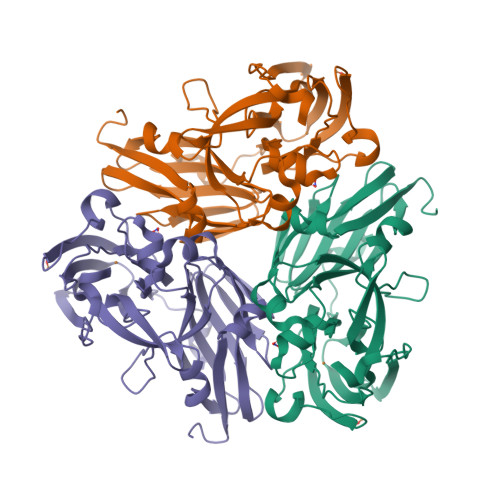
The crystal structure of MccA has been determined at 2.2 Å resolution [2, 3]. The enzyme exists as a homotrimer showing a novel fold and haem arrangement. The heterobimetallic active centre contains a Cu(I) ion and a haem c with a Fe—Cu distance of 4.4 Å [4].

a, W. succinogenes MccA binds its substrate sulfite in the dehydrated form, SO2, at the distal axial position of haem 2. At 3.2 Å distance from the sulphur atom, a Cu(I) ion is nearly linearly coordinated by residues C399 and C495.

b, In respiratory haem–copper oxidases, CuB is a redox-active species liganded by three histidine residues and juxtaposed to a haem a3 moiety. The arrangement, with a Fe–Cu distance of 4.9 Å, is optimized to bind O2 and peroxide in a bridging fashion (PDB:3ABM).

  1. Kern, M., Klotz, M.G. and Simon, J. (2011) The Wolinella succinogenes mcc gene cluster encodes an unconventional respiratory sulphite reduction system. Molecular Microbiology 82, 1515—1530.
  2. PDB:4RKM
  3. PDB:4RKN
  4. Hermann, B., Kern, M., La Pietra, L., Simon, J., Einsle, O. (2015) The octahaem MccA is a haem c-copper sulfite reductase. Nature 520, 706—709.

Saturday, February 27, 2016

First eukaryotic photosystem II solved at 2.76 Å

The water-splitting reaction of photosynthesis is catalysed by photosystem II (PSII), a large protein complex located in thylakoid membranes of organisms ranging from cyanobacteria to higher plants [1]. During the last 15 years, a number of crystal structures of PSII from cyanobacteria have been solved. However, no structures of PSII from eukaryots have been reported until now, partly due to the instability of eukaryotic PSII upon isolation. Ago et al. [2] solved the structure of PSII from a red alga Cyanidium caldarium at 2.76 Å resolution [3]. This PSII contains four extrinsic proteins, including the three subunits found in cyanobacterial PSII and the fourth subunit PsbQ' homologous to the PsbQ protein of green algae and higher plants. Furthermore, two novel trans-membrane helices were found in the algal PSII which are not present in cyanobacterial PSII.

  1. Shen, J.-R. (2015) The structure of photosystem II and the mechanism of water oxidation in photosynthesis. Annual Review of Plant Biology 66, 23—48.
  2. Ago, H., Adachi, H., Umena, Y., Tashiro, T., Kawakami, K., Kamiya, N., Tian, L., Han, G., Kuang, T., Liu, Z., Wang, F., Zou, H., Enami, I., Miyano, M. and Shen, J.-R. (2016) Novel features of eukaryotic photosystem II revealed by its crystal structure analysis from a red alga. J. Biol. Chem. 291, 5676—5687.
  3. PDB:4YUU

Saturday, January 30, 2016

Crystal structure of the DNAzyme 9DB1

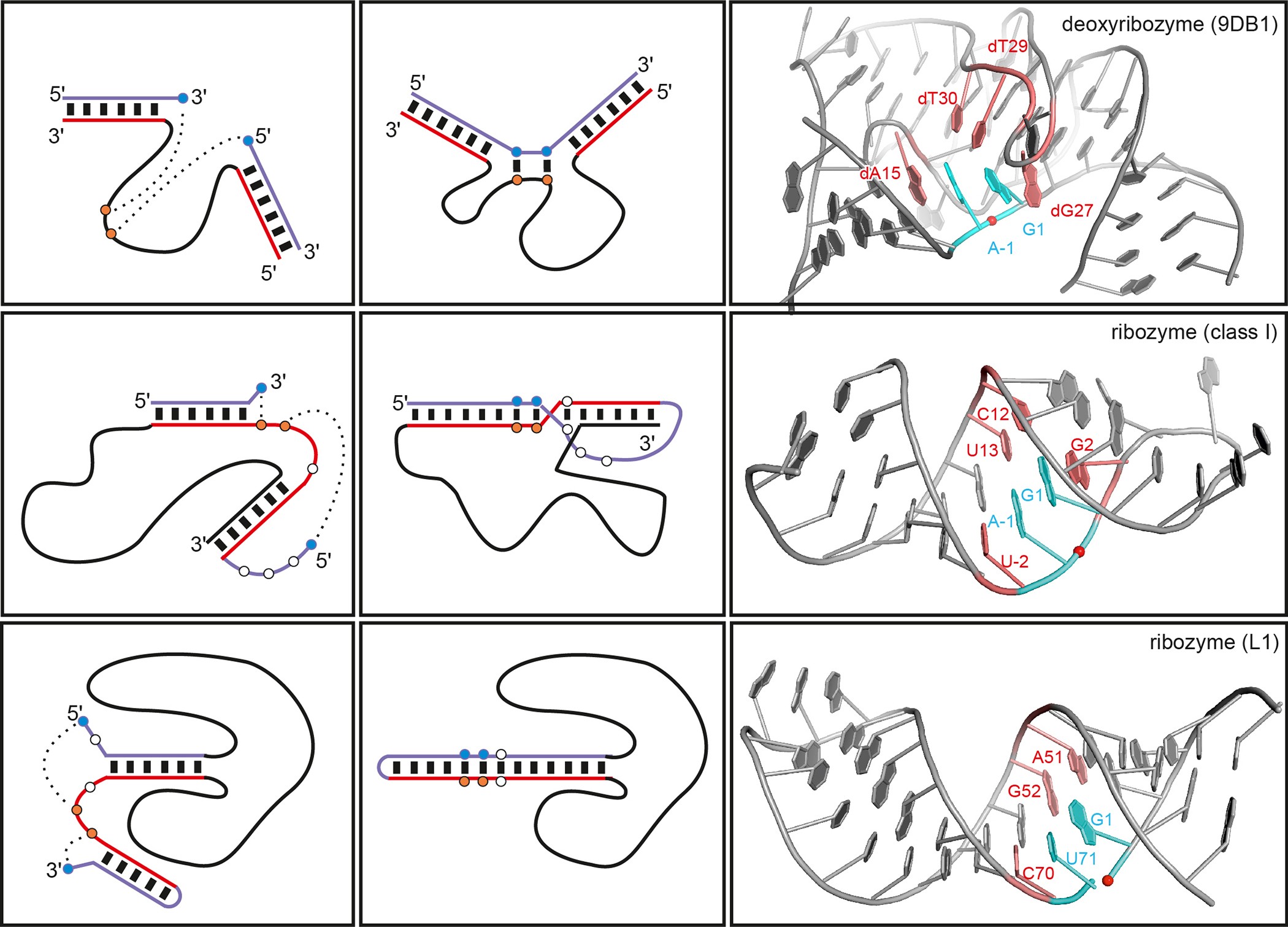
The first ever crystal structure of a deoxyribozyme has been solved at 2.8 Å resolution [1—3]. The work by researchers from Max Planck Institute for Biophysical Chemistry (Göttingen, Germany) also sheds light on a difference in catalytic mechanism of ribozymes and deoxyribozymes [4]:

Ribozymes use RNA’s 2´-hydroxyl groups, which are absent in DNA, for structural interactions or directly for catalysis. The new structure shows why the lack of these groups doesn’t diminish the catalytic activity of DNAzymes. The missing hydroxyls make DNA’s sugar-phosphate backbone more flexible, allowing acrobatic conformations that compensate for the absent hydroxyls in DNAzymes.

  1. Ponce-Salvatierra, A., Wawrzyniak-Turek, K., Steuerwald, U., Höbartner, C. and Pena, V. (2016) Crystal structure of a DNA catalyst. Nature 529, 231—234.
  2. PDB:5CKK
  3. PDB:5CKI
  4. Borman, S. (2016) After two decades of trying, scientists report first crystal structure of a DNAzyme. Chemical & Engineering News 94, issue 2, p. 3.

Friday, December 25, 2015

Human Apaf-1 apoptosome at 3.8 Å

The apoptotic protease-activating factor 1 (Apaf-1) exists in normal cells as an autoinhibited monomer. Upon binding to cytochrome c and dATP, Apaf-1 forms a heptameric complex known as the apoptosome. Zhou et al. report an atomic structure of an intact human Apaf-1 apoptosome at 3.8 Å resolution determined by single-particle, cryo-electron microscopy [1, 2].

  1. Zhou, M., Li, Y., Hu, Q., Bai, X.-c., Huang, W., Yan, C., Scheres, S.H.W. and Shi, Y. (2015) Atomic structure of the apoptosome: mechanism of cytochrome c- and dATP-mediated activation of Apaf-1. Genes & Development 29, 2349—2361.
  2. PDB:3JBT

Thursday, November 19, 2015

A magnetic protein biocompass?

A team of scientists from Peking University report a putative magnetic receptor (MagR) protein in Drosophila, CG8198 [1]. MagR binds an iron—sulphur cluster and interacts with photoreceptor cryptochrome (Cry) proteins to form a multimeric magnetosensing rod-like complex. Assemblies of these rods were observed orienting themselves in a weak magnetic field. Qin et al. speculate that these structures may function like compasses in living organisms, although the mechanism of magnetoreception in vivo remains a mystery [2].

A complete Cry/MagR magnetosensor protein complex structure model with 10 Crys helically binding to the rod-like MagR polymer consisting of 20 MagRs.
  1. Qin, S., Yin, H., Yang, C., Dou, Y., Liu, Z., Zhang, P., Yu, H., Huang, Y., Feng, J., Hao, J., Hao, J., Deng, L., Yan, X., Dong, X., Zhao, Z., Jiang, T., Wang, H.-W., Luo, S.-J. and Xie, C. (2016) A magnetic protein biocompass. Nature Materials 15, 217–226.
  2. Cyranoski, D. (2015) Long-sought biological compass discovered: Protein complex offers explanation for how animals sense Earth’s magnetic pull. Nature 527, 283–284.

Sunday, September 27, 2015

Nitrite binding modes in CuNIR

Fukuda and Inoue [1] have determined the crystal structure of the C135A mutant of thermostable copper nitrite reductase (CuNIR) from Geobacillus thermodenitrificans in complex with nitrite to 1.55 Å resolution. Interestingly, this high-temperature (320 K) structure [2] displays a near-bidentate binding mode of nitrite distinct from a monodentate mode in a cryogenic structure [3]:

To our knowledge, this is the first case in which the difference in substrate binding modes between cryogenic and high-temperature structures has been visualized by crystallography.

The copper site geometries are given in Table 1.

Table 1 (adapted from [4])

Cu—Ligand Distances (Å) 3X1N (320 K) 3WKP (100 K)
I. Type 1 Cu—residue distances
T1Cu—H95Nδ1 2.08 2.14
T1Cu—H143Nδ1 2.01 1.96
T1Cu—M148Sδ 2.13 2.07
II. Type 2 Cu—residue distances
T2Cu—H100Nε2 2.07 1.96
T2Cu—H134Nε2 2.00 1.95
T2Cu—H294Nε2 1.98 2.01
T2Cu—water 2.02 n/a
III. Type 2 Cu—nitrite distances
T2Cu—Oproximal 2.13 1.97
T2Cu—N 2.21 2.85
T2Cu—Odistal 2.52 3.41
  1. Fukuda, Y. and Inoue, T. (2015) High-temperature and high-resolution crystallography of thermostable copper nitrite reductase. Chemical Communications 51, 6532—6535.
  2. PDB:3X1N
  3. PDB:3WKP
  4. Fukuda, Y. and Inoue, T. (2015) High-temperature and high-resolution crystallography of thermostable copper nitrite reductase. Electronic Supplementary Material.

Tuesday, August 11, 2015

Colourful Compound Interest

I discovered Andy Brunning’s Compound Interest last year and got absolutely hooked on it – and I don’t even teach chemistry! If, perchance, you do teach chemistry and don’t yet know what CI is all about, then you probably should check it out. (And if you want to use the material in the classroom, you can download the high-resolution PDF files.) The topics range from general chemistry to material science, chemical warfare and everyday compounds. You’ve got answers to many questions you always wanted to ask but never had time to find out for yourself, like, “is it worth (not) to refrigerate tomatoes?”. The Undeserved Reputations section is a perfect antidote to the “oh my God, our food is still full of chemicals” stream of rubbish published by your Facebook friends.

Here are ten the top ten some of my CI favourites.

    Metal Ion Flame Test Colours Chart

  1. This is how (I’d like to think) I’ve got interested in chemistry. We used to have a gas hob in our kitchen. I loved the fact that the flame was blue. One day, my brother told me that you can make the flame bright orangey-yellow if you sprinkle it with table salt or bicarbonate of soda. “Why?”, I asked. “Sodium”, was the answer. Unsatisfactory as it was, it stayed in my memory. Yes, chemistry won’t be of any interest to me if not for flame and colours.
  2. Colours of Transition Metal Ions in Aqueous Solution

  3. When they are not busy burning or, better still, exploding stuff, your archetypal chemists are often imagined (and therefore portrayed; or is it the other way round?) as hiding behind the test tubes filled with colourful solutions. Which is just as well. The test tubes filled with colourless solutions would be really boring.
  4. What Causes the Colour of Gemstones?

  5. Who didn’t dream of finding a treasure, that is, a pirate’s chest filled with gold and jewels? Wait. I still dream of that. I remember how surprised I was when, back in elementary school, I read in some book that ruby and sapphire are basically the same mineral corundum, the only difference is in a type of impurity. Well it’s quite an important difference then. Without impurities, most gemstones would be colourless.
  6. The Chemistry of The Colours of Blood

  7. My interest in bioinorganic chemistry (even though at the time I didn’t know at it was called that) was also awakened in school, when I learned that some animals have blue blood. I also discovered that, contrary to what anatomy textbooks show, veins do not carry blue blood in humans. I am not sure if I was relieved or disappointed. Later, already in the university, I read about a Soviet-developed fluorocarbon-based blood substitute nicknamed “Blue Blood”. Fascinating stuff.
  8. The Chemicals Behind the Colours of Autumn Leaves

  9. I remember, as a child, reading, or rather browsing, an illustrated book about plants (translated from English), with many beautiful colour photographs. “This apple is yellow because of anthocyanin”. Next page: “This apple is yellow because of carotene”. Next page: “This apple is green because of chlorophyll”. The realisation dawned that, apple-wise, being green is not only necessary but sometimes sufficient.

    But what about leaves? When autumn comes, chlorophyll starts to break down and we get to see other pigments in them. Apart from caroteinoids and flavonoids, there are also coloured chlorophyll degradation products, termed “rusty pigments”.

  10. The Chemistry of Stain Removal

  11. Sometimes, however, we want to get rid of all these beautiful colours. The infographic shows the chemical methods of achieving that, although I am not sure that “enzymatic stains” is a correct name for stains caused by blood or grass (yes, haem and chlorophyll again!).
  12. The Atmospheres of the Solar System

  13. Alchemists associated seven metals with seven planets (which included the sun and the moon). At the time, it seemed to be quite reasonable. Now that nobody expects Mercury to be made of mercury (and, for that matter, Pluto to be made of plutonium), precious little is known about composition of these planets. About their atmospheres, we’ve learned a bit more. Hey, isn’t it amazing that Mercury’s atmosphere has by far highest percentage of molecular oxygen (42%) compared to any other atmosphere in Solar system? We still won’t be able to breathe there though, because its atmosphere is way too thin (its surface pressure is less than 10−14 bar).
  14. The Metals in UK Coins

  15. Compared to gemstones, coins are so much duller, especially now that we don’t come across either gold or silver coins any longer. Continuing the alchemical tradition, we can say that modern British coins of 20 pence and higher are mostly from Venus (that is, copper), while 1 p, 2 p, 5 p and 10 p coins are mostly from Mars (i.e. iron). Of course, you can find much more metal variety in commemorative coins.
  16. The Metal Reactivity Series

  17. In contrast to their salts, aqueous complexes and gemstones, pure metals do not offer a great variety of colours. Copper is red, gold is yellow and caesium is yellowish; the rest are coming in many shades of grey. But their chemical behaviour is wildly different, as this infographics shows. You don’t need a sophisticated lab equipment or fancy reagents, just water and some (diluted) acids. If there’s no reaction whatsoever, you’ve got a precious metal. Easy!
  18. Analytical Chemistry – Infrared (IR) Spectroscopy

  19. Did I tell you that my first love, as far as the world of analytical chemistry is concerned, was vibrational spectroscopy? If not, I’m telling you now. I’ve never got to do any experiment worthy of a publication, because if I did, believe me, it would have been awesome. This infographics reminded me of happy days of my studenthood when I knew and cared more about amide bands (bless them) than about money or my future career.

Wednesday, June 10, 2015

There is no perfect language

From The Information: A History, A Theory, A Flood by James Gleick:

It was once thought that a perfect language should have an exact one-to-one correspondence between words and their meanings. There should be no ambiguity, no vagueness, no confusion. Our earthly Babel is a falling off from the lost speech of Eden: a catastrophe and a punishment. “I imagine,” writes the novelist Dexter Palmer, “that the entries of the dictionary that lies on the desk in God’s study must have one-to-one correspondences between the words and their definitions, so that when God sends directives to his angels, they are completely free from ambiguity. Each sentence that He speaks or writes must be perfect, and therefore a miracle.” We know better now. With or without God, there is no perfect language.

Leibniz thought that if natural language could not be perfect, at least the calculus could: a language of symbols rigorously assigned. “All human thoughts might be entirely resolvable into a small number of thoughts considered as primitive.” These could then be combined and dissected mechanically, as it were. “Once this had been done, whoever uses such characters would either never make an error, or, at least, would have the possibility of immediately recognizing his mistakes, by using the simplest of tests.” Gödel ended that dream.

On the contrary, the idea of perfection is contrary to the nature of language. Information theory has helped us understand that — or, if you are a pessimist, forced us to understand it.

Monday, June 01, 2015

Periodic Videos

It’s been a while since I posted anything on this blog, but now I’m back.

This is a very cool collection of videos, “a lesson about every single element on the periodic table”. Featuring Professor and a really awesome reaction, here’s one about one of my favourite elements. Yes, iron is in my blood! (In yours too.)

Wednesday, October 15, 2014

Metals

From A Dictionary of Symbols by Juan Eduardo Cirlot (translated by Jack Sage):
In astrology they are called ‘terrestrial’ or ‘subterranean planets’, because of the analogous correspondences between the planets and the metals. For this reason astrologers consider that there are only seven metals (influenced by the same number of spheres), which does not mean that mankind during the astrobiological period did not recognize more. As Piobb has pointed out, some engineers have noted that the seven planetary metals make up a series which is applicable to the system of the twelve polygons. But, apart from the theory of correspondences, the metals symbolize cosmic energy in solidified form and, in consequence, the libido. On this basis, Jung has asserted that the base metals are the desires and the lusts of the flesh. Extracting the quintessence from these metals, or transmuting them into higher metals, is equivalent to setting creative energy free from the fetters of the sense world, a process identical with what esoteric tradition and astrology regard as liberation from the ‘planetary influences’. The metals can be grouped within a progressive ‘series’ in which each metal displays its hierarchical superiority over the one preceding it, with gold as the culminating point of the progression. This is why, in certain rites, the neophyte is required to divest himself of his ‘metals’ — coins, keys, trinkets — because they are symbolic of his habits, prejudices and characteristics, etc. We, for our part, however, are inclined to believe that in each particular pairing of planet with metal (as Mars with iron) there is an essential element of the ambitendent, in that its positive quality tends one way and its negative defect tends the other. Molten metal is an alchemic symbol expressing the coniunctio oppositorum (the conjunction of fire and water), related to mercury, Mercury and Plato’s primordial, androgynous being. And at the same time, the solid or ‘closed’ properties of matter emphasize its symbolism as a liberator — hence the connexion with Hermes the psychopomp <...> . The correspondences between the planets and the metals, from inferior to superior, are: Saturn — lead, Jupiter — tin, Mars — iron, Venus — copper, Mercury — mercury, Moon — silver, Sun — gold.

Tuesday, September 23, 2014

Pseudomonas fluorescens PhoX

Alkaline phosphatases (EC 3.1.3.1) occur widely in nature and are found in all three domains of life [1]. The Escherichia coli PhoA enzyme has been extensively studied whereas PhoX family of alkaline phosphatases are only minimally characterised and show no sequence similarity to other phosphotransfer enzymes. Yong et al. [2] determined high-resolution crystal structures for native PhoX from Pseudomonas fluorescens [3] and for its complexes with phosphate [4], a nonhydrolysable ATP analogue adenosine-5′-[β,γ-methylene]triphosphate (AMP-PCP) [5], and the putative transition-state mimic vanadate [6]. The active site contains two antiferromagnetically coupled ferric ions (Fe3+), three calcium ions (Ca2+), and an oxo group bridging one Ca2+ and two Fe3+ ions.

Cartoon representation of P. fluorescens PhoX crystal structure.
The PhoX active site containing bound phosphate [1, Fig. 2c].
A model for the catalytic mechanism of PhoX [1, Fig. 3d].
The transition state is indicated with the double dagger (‡) symbol.
  1. Millán, J.L. (2006) Alkaline Phosphatases: Structure, substrate specificity and functional relatedness to other members of a large superfamily of enzymes. Purinergic Signalling 2, 335–341.
  2. Yong, S.C., Roversi, P., Lillington, J., Rodriguez, F., Krehenbrink, M., Zeldin, O.B., Garman, E.F., Lea, S.M. and Berks, B.C. (2014) A complex iron-calcium cofactor catalyzing phosphotransfer chemistry. Science 345, 1170—1173.
  3. PDB:4A9V
  4. PDB:4ALF
  5. PDB:4AMF
  6. PDB:3ZWU

Tuesday, August 26, 2014

Ogres are not like cakes

I was intrigued by the article in New Scientist which starts with the question, “Do you speak chemistry?” [1]. So much that I asked my friend to send me the original paper [2] authored by the Bartosz Grzybowski group of Northwestern University in Evanston, Illinois. It is a curious reading.

Don’t get me wrong. I have nothing against the analogies. I love the analogies. If the linguistic analogy works for chemistry, it’s fine by me. As long as everybody understands that it is just an analogy.

The authors try to “demonstrate that a natural language such as English and organic chemistry have the same structure in terms of the frequency of, respectively, text fragments and molecular fragments”. How do they do that? They start by looking at the maximum common substrings (MCS) found in 100 sentences randomly chosen from English Wikipedia.

Perhaps not surprisingly, the most common fragment of the sentences is “e”, followed by “a” and “o”.
That is surprising to me though, considering that only “a” is a word in English. I wouldn’t be surprised if it happened to be Spanish Wikipedia. Are the authors talking about letter frequency per chance? But the “top three” letters in English (from most to least common) are known to be E, T, A while in Spanish they are E, A, O. Anyway, they show that the distribution of the fragments, whatever they are, follows the power law. Then they show that the distribution of the common molecular fragments, derived from the corpus of organic molecules, also follows the power law. Big deal: so do the earthquake magnitudes, populations of cities and stock market crashes [3]. Cadeddu et al. do not seem to be bothered with that at all:
We have just shown that there exists a set of molecular fragments with which organic molecules can be described akin to a language.
So far so bad; whether you are a linguist, a computational chemist or an organic chemist, both methodology and conclusions of this paper are bound to make you cringe. So, my immediate reaction was to dismiss it altogether. Ogres are not like cakes. Organic molecules are not like a language. End of story.

But could it be that I am missing something? On the one hand, the language of chemistry — whether we are talking trivial names, systematic names, or graphical diagrams — is very much like any other language: a system of communication. On the other hand, the molecules themselves are not. Unless they are the information macromolecules. The message encoded in a single DNA molecule can be very much abstracted from its chemical structure. Without any doubt, genetic code is a communication system, therefore it is a language, although not man-made.

It’s interesting that the authors view organic molecules as “sentences” rather than “words”; the latter would be the nomenclaturist’s approach. I guess it depends on your taste, or language preferences. Most systematic chemical names look alien in English but would fit rather nicely in German or Finnish. I personally view any chemical name as a noun phrase describing a corresponding molecular entity; a molecular entity itself is not a noun phrase. However, in natural languages, there rarely is a confusion regarding the boundaries of a word:

a word is the smallest element that may be uttered in isolation with semantic or pragmatic content (with literal or practical meaning).
On the contrary, Grzybowski’s “words” are the molecular fragments which do not exist in isolation. It is also worth noting that in the world of biopolymers, say nucleic acids, each monomer (as complex as any of Grzybowski’s “sentences”), is often represented as a letter, while an entire bacterial genome (still a single DNA molecule) could be considered a War and Peace (or Crime and Punishment).

Cadeddu et al. further claim that linguistic approach identifies the symmetry/repeat units in molecules such as α-cyclodextrin and porphyrin:

We emphasize that this is not a small feat given we have not even considered any (x, y, z) coordinates of the atoms making up these molecules and performed no linear-algebra analyses to find symmetries which, incidentally, can be a computationally intensive procedure involving manipulation of matrices.
I find this modest remark regarding the size of the “feat” within the body of a scientific article in a respectable journal really cute. Are the authors even aware that there are chemical similarity/substructure search engines? You don’t need atomic coordinates to identify the fragments with the same connectivity.

Which brings me to the final point. What is the “chemical linguistics” anyway? If the “words” of chemistry, as postulated in [2], are nothing else but molecular fragments, or substructures, then the chemoinformaticians were doing the substructure search of chemical databases for donkey’s years without knowing that it is called chemical linguistics. I am aware of completely different use of this term in a sense “mining of natural language texts for chemical information” [4, 5]. This latter use is well-established and I think applying the name “chemical linguistics” to unrelated area will only confuse everybody.

  1. Aron, J. (2014) Language of chemistry is unveiled by molecular make-up. New Scientist no. 2981, p. 8.
  2. Cadeddu, A., Wylie, E.K., Jurczak, J., Wampler-Doty, M. and Grzybowski, B.A. (2014) Organic chemistry as a language and the implications of chemical linguistics for structural and retrosynthetic analyses. Angewandte Chemie 126, 8246—8250.
  3. Buchanan, M. (2000) Ubiquity, Weidenfeld & Nicolson, London.
  4. Goebels, L., Grotz, H., Lawson, A.L., Roller, S. and Wisniewski, J. (2005) Method and software for extracting chemical data. Patent DE 102005020083 A1.
  5. Day, N.E., Corbett, P.T. and Murray-Rust, P. (2007) Semantic chemical publishing. ACS National Meeting #233, Chicago.