Sunday, November 14, 2010

It’s elementary

According to IUPAC’s Principles of Chemical Nomenclature [1],

An element (or an elementary substance) is matter, the atoms of which are alike in having the same positive charge on the nucleus (or atomic number).

In certain languages, a clear distinction is made between the terms ‘element’ and ‘elementary substance’. In English, it is not customary to make such nice distinctions, and the word ‘atom’ is sometimes also used interchangeably with element or elementary substance. Particular care should be exercised in the use and comprehension of these terms.

An atom is the smallest unit quantity of an element that is capable of existence, whether alone or in chemical combination with other atoms of the same or other elements.

You can’t help noticing the circular nature of these definitions: An element is matter, the atoms of which have the same atomic number; while an atom is the smallest unit quantity of an element. And what are “atoms of the same or other elements” if not just “any atoms”?

Of course it is not helpful that ‘element’ is used for either ‘elementary substance’ or ‘atom’. The ChEBI solution was to get away from ‘element’. Instead, there are either atoms or elemental molecular entities. These belong to different branches of ontology, so they should not really be confused. Or at least, that was the idea.

In ChEBI, ‘elemental’ applies to any class of molecular entities which consist of only one type of atom, be they mono- or polyatomic. For instance, elemental oxygen can be mono-, di- or triatomic. On the other hand, the oxygen atom can be part of a non-elemental molecular entity.

If there is a scope for confusion, people will get confused. Here’s a question I heard on more than one occasion: what is the difference between monoatomic oxygen and oxygen atom? After all, any form of monoatomic oxygen, viz. oxide(•1−), oxide(2−), or neutral monooxygen, can also be referred to as an ‘oxygen atom’. Ditto any of the monooxygen groups: oxido (—O), oxo (=O) and oxy (‒O‒). The thing is, they belong to different universes (which, properly, should be made disjoint):

  • monoatomic oxygen is a monoatomic entity is a molecular entity
  • monooxygen group is a group
  • oxygen atom is a atom

A group does not exist on its own: it is always a part of polyatomic entity and consists of at least one atom plus at least one bond. Monoatomic entity consists of one (and only one) atom and does exist on its own. Since we need ‘atom’ to define both groups and molecular entities, it is a good idea to keep atoms in an independent, disjoint branch.

  1. Leigh, G.J., Favre, H.A. and Metanomski, W.V. Principles of Chemical Nomenclature: A Guide to IUPAC Recommendations. Blackwell Science, 1998, p. 3.

Monday, September 13, 2010

Ontology and reality

One of these days, I keep promising myself, I am going to publish something incredibly clever about chemistry, ontology and/or chemical ontology. Then again, I need some incentive to do so, and there’s none in my view. In the meantime, I am happy that somebody else has bothered to write a paper dealing with so-called “realist” approach to ontology [1].

Personally, I never cared much about the “reality” as used in context of OBO Foundry Principles [2]:
Terms in an ontology should correspond to instances in reality.
Worse still is its “corollary”:
Ontologies consist of representations of types in reality — therefore, their preferred terms should consist entirely of singular nouns.
(Why? Does “reality” really consist of singular English nouns?)

Now Lord and Stevens confirm my gut feeling that “realism” (the authors take care to clarify that “realism” in [1] stands for “realism as practiced by BFO”) applied to ontology building often results in unnecessary complexity. Everybody who ever studied physics (or English) in school would agree that expression |dr/dt| is much better definition of speed than the one provided by PATO: “A physical quality inhering in a bearer by virtue of the bearer’s rate of change of position”. To quote [1],
It makes little sense to replicate the models of physics using English instead of a more precise mathematical notation.
Alas, this is exactly what BFO (and most of OBOs) are trying to do. By going “where science has gone before” without learning the language of the science, BFO & Co. keep reinventing the square wheel.

OK, what about chemistry? Chemistry has developed its own language which makes the plain-text definitions for molecular entities redundant. The 2-D diagram (connectivity) defines the molecule of interest better than a paragraph in English. In theory, the systematic name should provide the exactly same information (and thus to be usable as a definition). However, the systematic names for even relatively small molecules often are too complicated to be widely (or ever) used.

Take the systematic name (a) for beauvericin. You are extremely unlikely to either hear it (because it is more or less unpronounceable) or see it (it takes more than one line of text, which is annoying). More importantly, there is a certain limit of molecular complexity above which the systematic names (according the existing nomenclature rules, that is) simply cannot be generated. On the other hand, the diagram (b) is both beautiful and useful.

(a)(3S,6R,9S,12R,15S,18R)-3,9,15-tribenzyl-4,10,16-trimethyl-6,12,18-tri(propan-2-yl)-1,7,13-trioxa-4,10,16-triazacyclooctadecane-2,5,8,11,14,17-hexone
(b)

Not only are the 2-D diagrams self-defining, they provide all the information needed to build the consistent ontology for molecular entities. With a few simple rules, the ontology will build itself from scratch, I promise. But this is a topic for another post.
  1. Lord, P. and Stevens, R. (2010) Adding a little reality to building ontologies for biology. PLoS ONE 5, e12258.
  2. OBO Foundry Principles.

Wednesday, September 08, 2010

Terminology vs nomenclature

First published 8 September 2010 @ just some words

According to The Concise Oxford Dictionary,

nomenclature n. 1 a person’s or community’s system of names for things. 2 the terminology of a science etc. 3 systematic naming. 4 a catalogue or register.
terminology n. (pl. -ies) 1 the system of terms used in a particular subject. 2 the science of the proper use of terms.
I must say that these definitions do not add much clarity. Do you see any difference between “system of names for things” and “system of terms”? Moreover, the nomenclature (2) appears to be equated with the terminology. As for terminology (2), it is akin to terminology as defined by Wikipedia: “the study of terms and their use”, although I have my doubts whether there is such thing as “the science of the proper use of terms”. As was mentioned before, “logy” does not always mean “a subject of study or interest”. And what is “proper”?

On the other hand, Merriam-Webster defines terminology as

1 the technical or special terms used in a business, art, science, or special subject
2 nomenclature as a field of study
No, this does not help at all. Let us agree on the following: terminology is not nomenclature, and nomenclature is not terminology. I suggest these working definitions:
    terminology: a set of terms used in a particular field.
    nomenclature: a system of generating new terms for a particular field.

Completely different things. Terminology is a subset of vocabulary and, therefore, is part of the language. Nomenclature is a set of external rules. A good nomenclature system has few rules all of which should be understood and applied, preferably with reproducible results, by more than one person.

That is not to say that terminology does not depend on nomenclature or vice versa. Terms can be formed by systematic application of nomenclature rules — that’s what the nomenclature is devised for. But they also can arise by different mechanisms, just like any new words do. Often, terms are recruited from the existing lexicon and conferred new meanings. For instance, the word “residue” acquired specific meanings in fields of math, chemistry or law.

The Russian word for nomenclature, номенклатура, has an additional meaning: the bureaucratic class of Soviet Union and its descendants (as in “post-Soviet nomenklatura”).

Tuesday, July 27, 2010

Spoken chemistry

As I was going, for the nth time, through the draft of the “new Blue Book”, it did strike me how much attention is paid to the appearance of a printed word. It is discussed in length what type of dash or bracket to use, which part of term has to be italicised and so on, whereas we often do not even know how to pronounce it. Which is a shame really, because I think IUPAC should take care of pronunciation (and comprehension of a spoken word) when coming with nomenclature recommendations. These are meant to improve the quality of chemical language, right? But the language where words cannot be pronounced is dead. (Think ancient Egyptian.)

Imagine we are given a task of recording an audio book on chemical nomenclature. Suddenly the names that look neat on paper become next to useless. Why? We do not pronounce parentheses (brackets, braces). We can’t pronounce sub- or superscripts. Ditto dashes, full stops and colons, which all can be parts of systematical names. Not to mention white space.

No, in olden days the pronunciation of your chemicals was taken seriously. Back in 1949, Dr. W. Bryce Orme wrote in a letter to British Medical Journal [1]:

Doctors and chemists are aware that difficulties occur in reaching consistency in the pronunciation of certain chemical terms, such as benzene and benzine, but generally it is conceded that the former should be rendered as ben'zēn and the latter ben'zin. It was, however, a shock to hear several highly qualified and distinguished chemists at a well-known pharmaceutical laboratory all referring to the radical CH3 as mēthyl. I had the temerity to correct them and pointed out that the term was derived from the Greek μεθυ = wine + ύλη = wood. . . . Neither Dorland’s Medical Dictionary nor our old school friend, Liddell and Scott’s Lexicon, refers to any latitude in the pronunciation of methyl.

Well I never. American Chemical Society had a Nomenclature, Spelling and Pronunciation Committee, which even came up in 1934 with a list of recommended pronunciation for 437 terms [2]. Apparently, one even could order the complete report by writing to the chairman of the committee:

A charge of five cents per reprint (postage acceptable) to cover costs is made.

Sounds like a bargain, but that was quite a while ago. So far I was unable to get hold of the report. However, I found the next best thing: a list of about 400 common chemical terms that originally appeared on an audio tape prepared by Dr. M.P. Sammes and the Hong Kong Association for Science and Mathematics Education in 1988 [3]. Now, at long last, I know how to say “2-ethanoyloxybenzenecarboxylic acid”.

  1. Orme, W.B. (1949) Points from letters: Pronunciation of chemical terms. Br. Med. J. 2 (4638), 1236.
  2. Crane, E.J. (1934) The pronunciation of chemical words. J. Chem. Educ. 11, 454.
  3. Sammes, M.P. Pronunciation of Chemical Terms.

Tuesday, May 11, 2010

Don’t trust your eyes

Ultramarine differs from other inorganic pigments in that it does not contain any transition metals. It is the sulfur species that confer the colour: S3•− (blue ultramarine), S2•− (yellow ultramarine) or S4 (red ultramarine). Green ultramarine contains both S2•− and S3•− [1].

You’d think that by now they should know what the structure of ultramarine is. But no. In the Inorganic Crystal Structure Database I’ve found only two structures called “ultramarine” (ICSD 27523 and 27524), both associated with a paper from 1936 [2]. The composition of ICSD 27523 is given as Na8Al6Si6O24S2.5·(H2O)0.6. The structure (see figure below) is an aluminosilicate cage containing sodium cations and beautiful octahedral sulfur clusters. Wait a minute. S7 clusters? Never heard about those before.

A more recent structure of deuterated lazurite, Na7.5Al6Si6O24S4.5·(D2O)0.5 (ICSD 63022), also featuring S7 octahedra, provided an explanation. The authors [3] wrote that

to accommodate the indications emerging from the difference maps, the octahedral model of sulfur occupancy was modified to reproduce a more even density inside cage by adding a further sulfur to the hollow octahedral shell, with sulfur occupancies rescaled accordingly to maintain S3 overall.
I feel relieved if slightly disappointed.

  1. Landman, A.A. (2003) Aspects of solid-state chemistry of fly ash and ultramarine pigments. Doctoral Thesis, University of Pretoria.
  2. Podschus, E., Hofmann, U. & Leschewski, K. (1936) Röntgenographische Strukturuntersuchung von Ultramarinblau und seinen Reaktionsprodukten. Zeitschrift für anorganische und allgemeine Chemie 228, 305—333.
  3. Tarling, S.E., Barnes, P. and Klinowski, J. (1988) The structure and Si,Al distribution of the ultramarines. Acta Crystallographica B44, 128—135.

Tuesday, April 06, 2010

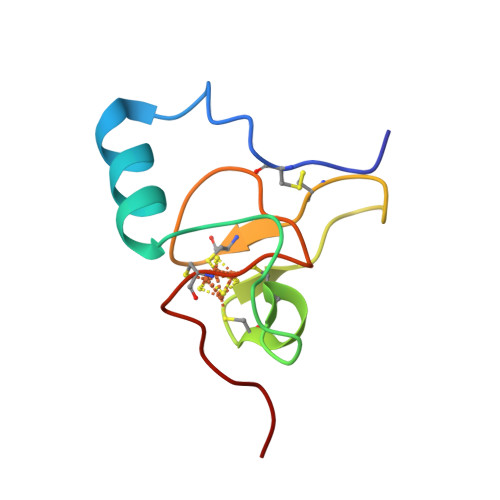
Rhodothermus marinus HiPIP at 1.0 Å

Meike Stelter and colleagues have solved the crystal structure of the reduced form of a high-potential iron–sulfur protein (HiPIP) from the thermophilic eubacterium Rhodothermus marinus.

This is the first structure of a HiPIP isolated from a nonphotosynthetic bacterium involved in an aerobic respiratory chain. The structure shows a similar environment around the cluster as the other HiPIPs from phototrophic bacteria, but reveals several features distinct from those of the other HiPIPs of phototrophic bacteria, such as a different fold of the N-terminal region of the polypeptide due to a disulfide bridge and a ten-residue-long insertion.

Saturday, March 20, 2010

Popular health supplements

David McCandless and Andy Perkins have created a generative data-visualisation of scientific evidence for popular health supplements. The more Google hits, the bigger the bubble. The greater the evidence for its effectiveness (according to PubChem abstracts and The Cochrane Collaboration), the higher a bubble. The evidence ranges from “none” to “strong” (through “slight”, “conflicting”, “promising” and “good”). This visualisation generates itself from this spreadsheet. As you can see, these supplements are quite a mixed bag, e.g.

  • L-lysine
  • (unspecified) arginine
  • selenium (in which form?)
  • fish oil
  • probiotics

Interestingly, of all the metals used as “health supplements”, only calcium (effective only for the specific condition of colorectal cancer) is above “worth it” line.

Thursday, March 18, 2010

Hydrogen

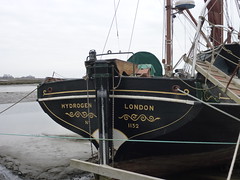
I say, Hydrogen is a bit unusual name for a boat. But here she is, the Thames sailing barge Hydrogen (1906) in Maldon, Essex.

She circumnavigated Great Britain for Bells Whisky and became charter barge based Maldon.

This page contains some historic photographs of Hydrogen.

Thursday, February 25, 2010

Aluminium ion clock

The scientists at the National Institute of Standards and Technology (NIST) created a new optical clock of unprecedented precision.

The clock, which is based on a single aluminium ion, could remain accurate to within one second over 3.7 billion years. The previous record was held by a clock with one mercury ion, which was good to one second in 1.7 billion years.

My, these are some mind-boggling figures.

I thought that one 27Al+ ion should not take much space. But then, they needed another “logic ion”, 25Mg+. And a vacuum chamber. And two lasers. (Not three lasers, as in earlier model which used Al+/Be+ pair, so I presume the new clock is more compact.) I couldn’t find in the preprint what are the dimensions of the whole contraption. However, the NIST press release features the photo of one of the authors, Chin-wen Chou, together with the famous clock. The caption says that

The ion is trapped inside the metal cylinder (center right).

Not exactly wristwatch size but easily fits in Big Ben.

Thursday, February 11, 2010

Selenite

  1. In chemistry, selenite, [SeO3]2−, is a diconjugate base of selenous acid, H2SeO3.
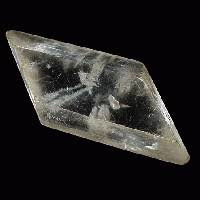
  2. In mineralogy, selenite is a variety of gypsum, CaSO4·2H2O.
  3. In science fiction, e.g. in The First Men in the Moon by H. G. Wells, the native inhabitants of the Moon are referred to as “Selenites”.

All three words are derived from Σελήνη, Greek for the Moon. Ironically, only fictitious Selenites have a “real” lunar connection.

selenite(2-)
(1)
selenite crystal
(2)

Selenite (1) — not to be confused with selenate or selenide — is named similarly to other oxoanions of “ous” acids, such as sulfite or nitrite. The systematic name recommended by the Red Book is trioxidoselenate(2−). Now, Berzelius gave the element selenium its name by analogy with tellurium, which, in its turn, was named after Tellus, Latin for Earth. (Do you follow the logic?) The Mineral Information Institute gives an alternative explanation:

This is a reference to the silvery-gray color of metallic, non-crystalline selenium.

A similar line of thinking is responsible for naming of selenite (2):

From the Greek σελήυη, for “moon”, in allusion to the moon-like white reflections of the mineral or to the quality of the light transmitted by semi-pellucid gypsum slabs of cleavages used as windows.

Fine, but not as touching as this childhood belief:

When we were studying chemistry and the teacher talked about selenium, I thought that selenium was named after a Mexican pop star Selena who died during my childhood.

Speaking of Mexico: the world’s largest natural crystals, some as long as 11 meters, consist of selenite (2) and are found in Cueva de los Cristales in Chihuahua, Mexico.

Thursday, February 04, 2010

The rise and fall of the Zinc World

I like the way the journals such as Biology Direct now publish reviewers’ comments and authors’ responses together with a final version of the paper. The fact that reviewers’ names are made public ensure that reviewers are properly acknowledged as well as share some responsibility for releasing another pointless paper into the wild. The discussion is often more interesting than a paper. Take the couple of recent highly speculative articles on Zinc world and origin of life [1, 2]. Even though I myself would not recommend any of these manuscripts for publication (luckily nobody asked me), I am glad that these were eventually published, because I really enjoyed reading the reviews — and, occasionally, the authors’ responses.

Reviewer 4: Last but not least I find the last sentence of the paper rather revealing: what could the aesthetics of minerals to do with a scientific argument on the origin of life?

Author’s response: Aesthetic criteria are of great importance in scientific research <...> For example, my initial opposition to the idea of abiogenesis at the floor of the Hadean ocean, when I first heard about it, was purely aesthetic. I simply did not like the idea of the origin of life being in complete darkness.
Similarly, it could have been stated “I simply liked the idea of using a single type of metal cation to fulfill all life’s metal needs”. The authors acknowledge the need for transition metal ions for origin of life but argue that the zinc is preferred to other transition metals because it is not redox-active. (According to modern view, zinc is not a transition element at all — why to bring transition metals in the first place?) For example, both papers contain the statement that “iron, unlike zinc, is redox-active”. Wait a minute. Is it bad? Since zinc is not redox-active, it cannot be used as a redox cofactor, therefore there won’t be any oxidoreductases utilising zinc. But fear not; apparently, the authors think that NAD(P)H, FAD and FMN evolved before primitive life forms learned how to use Fe2+ ions safely.

Incidentally, the only danger of redox-active iron mentioned in these papers seems to be the “harmful hydroxyl radicals”. I would not worry much about them though because I don’t think they were the main hazard in largely anoxygenic environment. In general, conditions on Earth at the time were rather harsh. You would’t go outside without an oxygen mask and a very thick (a few inches?) layer of sunscreen. Now add, on top of that, ZnS-catalysed photosynthetic production of formaldehyde [2, equation 1]... yep, sounds a plausible enough way to kick off that life thing.

  1. Mulkidjanian, A.Y. (2009) On the origin of life in the Zinc world: 1. Photosynthesizing, porous edifices built of hydrothermally precipitated zinc sulfide as cradles of life on Earth. Biology Direct 4, 26.
  2. Mulkidjanian, A.Y. and Galperin, M.Y. (2009) On the origin of life in the Zinc world. 2. Validation of the hypothesis on the photosynthesizing zinc sulfide edifices as cradles of life on Earth. Biology Direct 4, 27.

Sunday, January 24, 2010

BioMetals 2010

Online registration for 7th International Biometals Symposium (BioMetals 2010) is now open. The meeting will take place in Tucson, Arizona, USA, July 25—30, 2010.

Sessions are planned on Arsenic: Toxicity and Transformation; Siderophores and Iron Transport; Interplay of Metals; Metals and Gene Regulation; Metals in Disease and Metal Transport. See the current list of invited speakers.

The conference is limited to 200 participants, so early registration is recommended.

Monday, January 18, 2010

Metals in ancient Egypt

The al of “alchemy” is an Arabic article, but what about the rest of the word? Wikipedia mentions theories favouring Egyptian, Greek or Persian origin of the root. Whatever the etymology, it looks like ancient Egyptians knew quite a lot of chemistry.

This table of Egyptian symbols for the metals (don’t think any of them is in Unicode) misses two or three metals known to ancient Egyptians. According to Hamed A. Ead,

tin was used in the manufacture of bronze, and cobalt has been detected as a coloring agent in certain specimens of glass and glaze. Neither metal occurs naturally in Egypt, and it seems probable that supplies of ore were imported from Persia.
Mercury <...> is stated to have been found in Egyptian tombs of from 1500—1600 B.C.
Perhaps not surprisingly, the terminology used in ancient Egyptian chemical literature sometimes was deliberately misleading:
The use of the trade names for the purpose of concealing the character of the substance used where secrecy seemed desirable was not unknown at that period.
The secret names as the later alchemists used extensively: “blood of the serpent”, “blood of Hephaistos”, “blood of Vesta”, “seed of the lion”, “seed of Hercules”, “bone of the phyasimian”, etc.
The term “blood of the dove” used in the papyrus, von Lippmann has identified from other sources as meaning red lead or sometimes cinnabar.

Saturday, January 09, 2010

Below minus forty

Cold snap, you say? I do remember one New Year’s Day when the temperature in the Moscow region dropped below −40°. (Celsius or Fahrenheit? In this particular case, it’s the same: −40 °C = −40 °F = 233.15 K.) On 1 January 1979, we woke up in the (late) morning only to discover that we are stuck without any tea or hot food. We couldn’t switch on the gas cooker, which was running on propane/butane mixture. Why? As explained in this useful guide,

When the temperature of the liquids falls below its current boiling point the pressure inside the canister will no longer drive vapour out.

The boiling point of butane is −0.5 °C and that of propane is −42 °C; the temperature outside was below −42 °C, and the gas canisters were outside!

My mum called for a friendly neighbour who was better equipped than us. We kids did not worry too much about a guy warming up a gas canister with a blow torch. Anyway, everything went just fine and we had a wonderful day.

Sunday, December 20, 2009

Seizure

With all these holidays, it seems that I missed another great exhibition: “Seizure” by Roger Hiorns (open until 3 January 2010). According to The Guardian,

Hiorns filled a bedsit with 75,000 litres of copper sulphate solution, which hardened over several weeks into crystals. The installation secured him a nomination for the Turner Prize.

What you see on the walls (floor, ceiling etc.) is copper sulfate pentahydrate (CuSO4·5H2O). A stylish way to refurbish the apartment.

Saturday, December 12, 2009

Cobalt chlorium G and water fluoridation

Two chemistry-related quotes from Dr. Strangelove:

You’ve obviously never heard of cobalt chlorium G. It has a radioactive half-life of 93 years.
Have you ever heard of a thing called fluoridation of water?

In contrast to fictitious “cobalt chlorium G”, water fluoridation is real. So is opposition to it. To quote the recent Australian study, “water fluoridation appears to be a low-risk, high-outrage controversy”. Luckily, the communist threat is no longer mentioned — or so I thought until I came across a recent publication quoting a Californian mum who wondered whether the dentist was “one of those socialists trying to poison us with fluoride”. From The Fluoride Wars: How a Modest Public Health Measure Became America’s Longest Running Political Melodrama:

It seemed such simple act at the time <in 1945>. A tap was turned, and water that had been chlorinated for many years without much fuss now carried a second chemical supplement to help keep us healthy. Soon, the taps would be turned in city after city across the nation. For most, it was another blessing bestowed on us by modern medical science. But for some, it was one chemical too many.

Monday, November 23, 2009

The Gold Book

The Gold Book and the Silver Book (currently under revision) are two of the so-called colour books. Which kind of implies that gold and silver are colours. Not that IUPAC ran out of ‘real’ colours — e.g. they still could have chosen pink or yellow or black. For long time I thought that the reason behind naming the Gold Book ‘Gold Book’ was its (intended) role as a gold standard for chemical terminology. I was wrong. It was named in honour of Victor Gold (1922—1985), the British chemist who was the first author and compiler of the book. No such story with the Silver Book, I am afraid.

One of problems with the Gold Book (as opposed to other colour books) is that it deals with ‘general’ chemical nomenclature. Therefore, when it comes to terms which are different meanings in different fields of chemistry, the Gold Book gives more than one definition. Which one should be used? Take ligands. The definition 1 (coordination chemistry) is short and nice, while the definition 2 (biochemistry) is long and horrible. At least it mentions that in bioinorganic chemistry, one should be careful which definition to use.

In case of sulfides, there are three different meaning. Sulfides 1 (organic chemistry) is the replacement term for obsolete but less ambiguous ‘thioethers’, while sulfides 2 (inorganic chemistry) are “salts or other derivatives of hydrogen sulfide”. I am happy with salts but not with the “other derivatives”. Is sulfenic acid (IUPAC name ‘sulfanol’) a sulfide? As for sulfides 3, the definition goes “a term used in additive nomenclature”. Excellent.

Similarly, there is a consistency problem with related terms that are derived from different IUPAC recommendations. The entry for dipolar bond (1994) says:

The term is preferred to the obsolescent synonyms ‘coordinate link’, ‘coordinate covalence’, ‘dative bond’, ‘semipolar bond’.

And yet the more recent entry for dative bond (1999) does not mention that the term is obsolete. It is even states that

In spite of the analogy of dative bonds with covalent bonds, in that both types imply sharing a common electron pair between two vicinal atoms, the former are distinguished by their significant polarity, lesser strength, and greater length.

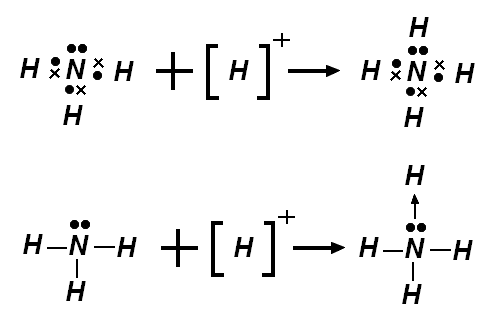
A textbook example of dative bond is the one in ammonium. Of course, all the N—H bonds are exactly the same, even if you choose to represent one of them with an arrow.

Thursday, November 19, 2009

Visual maths

Many old jokes are based on the stereotype of mathematicians as impractical freaks (as opposed to, say, chemists). Here’s one from my university days (as told by the lecturer in physical chemistry):

How to calculate the area of this figure? (Draws a squiggly figure on a blackboard.) A mathematician spends three days establishing the nature of the function and two days taking the integral. By the end of the week, the problem is solved. A chemist draws the figure on graph paper, cuts it out and weighs it on an analytical balance. The problem is solved in 10 minutes.

Note that the chemist, apart from being ‘simply’ practical, also provides more direct answer to the question.

I prefer graphics to formulae. If I can’t draw a graph, I won’t grasp a concept. Luckily, there are some great resources on the web. For instance, MatematicasVisuales contains a nice collection of Java applets which elegantly visualise a number of mathematical concepts. Examples range from geometry to probability.

This applet illustrates some aspects of the braid theory. Click on ‘draw’, enter a braid word, e.g. BcbACb, and see your braid! The applet also can ‘reduce’, or simplify, the braid diagram, as well as to solve the braid isotopy problem (‘compare’).

==

Saturday, November 07, 2009

Chromium

The name of chromium is derived from the Greek χρωμα (colour), because many of chromium compounds have bright colours. Chromium is also the name of the open-source browser project behind Google Chrome. Chrome is a hacker slang for the graphical user interface. The Chrome logo (a) features Google colours while the Chromium logo (b) is almost monochrome.

Chrome logoChromium logo
ab

I liked the idea of Chrome for Linux without Google’s branding. I have followed this instruction to the letter to install Chromium on my Acer Aspire One netbook and it worked beautifully. Chromium certainly lacks lot of Firefox’s functionality but it does most things I need. Plus, it is very fast and you can change the appearance of browser using themes.

Wednesday, November 04, 2009

Some ChEBI news

Wow. Today’s ChEBI news inform that

ChEBI release 62 is now available, containing 455,788 total entities, of which 19,236 are annotated entities and 607 were submitted via the ChEBI submission tool.

Looking back, I must say that ChEBI news lack consistency and therefore the users are bound to be confused. Before, we never said how many entities ChEBI contained in total. For the previous release, only “annotated” entities were counted:

ChEBI release 61 is now available, containing 18933 annotated entities, with 413 of those submitted via the ChEBI submission tool.

And a few releases back, “annotated” was not mentioned at all:

ChEBI release 58 contains 18186 entities with 175 of those submitted via the ChEBI submission tool.

Does “annotated” matter? Most ChEBI entries are annotated is some way. That includes all these thousands of compounds which just came from ChEMBL. What is meant here really is “annotated and approved by ChEBI curators”. But wait:

With this release, we’ve incorporated the compound records from the ChEMBL dataset and introduced a starring system to identify core (3-star) annotated ChEBI entries from entries annotated by the ChEMBL project and ChEBI submitters.

This is unfortunate that ChEBI introduced stars to signify entry quality. I think I am not the only one who firmly associates stars with user’s (external reviewer’s) rating. “Thou shalt not award no stars to thyself.” In addition, the star rating system usually implies that stars can be lost as well as gained, which is not the case in ChEBI: once the three-star status is reached, the entry stays as it is.

Oh well. Sure ChEBI is not perfect, but what is? Perhaps in a couple of releases we’ll see another change, stars replaced by other celestial bodies or flowers or traffic signs. Good night.

Tuesday, October 20, 2009

Metalloproteomics

“Metalloproteomics” is a relatively new and not that widely known term. Today (20 October 2009), PubMed search produces only 13 hits. (The search for “metallomics” gives only twice as many hits.) The earliest use of the term is by Alfredo Sanz-Medel and by Scott et al. — incidentally, both papers were published online 23 December 2004.

Metalloproteomics by Eugene Permyakov (Wiley-Interscience, 2009) gives us a definition of the term:

Metalloproteomics is a proteomics of metal-binding proteins.

That’s easy, right? But wait. Check out the table of contents. It looks to me like another bioinorganic chemistry book, and a rather pricey one. It mostly deals with metalloproteins, but there are also Chapter 15, Interactions of metal cations with nucleic acids, and Chapter 16, “Nonphysiologic” metals. Nothing here is specifically proteomic or metallomic. I suppose that Chapter 3, Experimental methods used for studies of the binding of metal cations could be of some relevance to metalloproteomics. Then again, maybe not: how come that mass spectrometry, the most obvious proteomics technique, is not mentioned at all? And why metal cations only? Some metalloproteins contain vanadate. Maybe I am jumping to conclusions here (without even reading the book!), but this title is simply misleading.

Sunday, October 11, 2009

Metal instruments

This post was prompted by my recent exercises with trombone. Like many (but not all) brass instruments, trombone is actually made of brass, i.e. alloy of copper and zinc. Thus the English term “brass” is more pertinent than French cuivre or Russian медные (both mean “copper”). Still, it is misleading: saxophones (which are woodwind instruments) are also commonly made of brass. But then, I also heard of all-aluminium double bass which was patented in 1934 under the inconspicuous name “Musical instrument of the viol and violin type”.

Can one distinguish the sound of a silver flute from the sound of a gold flute? This study attempted to answer this question with a scientific experiment. Here’s the experimental setup:

A silver coated, full silver, 9 carat gold, 14 carat gold, 24 carat gold, platinum coated and all-platinum flute was played by 7 professional flutists (members of Viennese orchestras including the Vienna Philharmonic orchestra) in an anechoic chamber.

And the result?

As expected, the most significant assigned expressions for all instruments were the “contradictionary <contradictory?> expressions”: for example, the sound color of each instrument was evaluated as “bright” and simultaneously as “dark” or “full/round” and “thin/sharp”.
Tests with experienced professional flutists and listeners and one model of a flute made by Muramatsu from 7 different materials showed no evidence that the wall material has any appreciable effect on the sound color or dynamic range of the instrument. The common stereotypes used by flutists and flute makers are exposed as “stereotypes”.

So there. It’s a shame that Muramatsu does not make aluminium flutes.

Wednesday, September 30, 2009

Uranyl-binding protein

“Uranyl ion” is the traditional name of dioxidouranium(2+), [UO2]2+. According to Wikipedia, [UO2]2+ is “the most common species encountered in the aqueous chemistry of uranium”. Wegner et al. designed a uranyl-selective DNA-binding protein using the template of NikR, a nickel-dependent transcriptional repressor from E. coli. The binding site of wild-type NikR was modified by a series of mutations (Val72Ser, His76Asp and Cys95Asp) to introduce extra hard equatorial ligands to favour binding of [UO2]2+.

Wild-type NikR binds to its promoter DNA in the presence of Ni2+ ions, and a number of other divalent metal ions such as Cu2+, Zn2+, Co2+, Mn2+, and Cd2+ can also induce protein-DNA complex formation. However, NikR does not bind to DNA in the presence of 50 μM UO22+. The <triple> mutant NikR′ binds to DNA neither in the absence of metal ions nor in the presence of Ni2+ ions, but it forms a protein-DNA complex in the presence of UO22+. In comparison to NikR, the metal selectivity of NikR′ has been altered. Experiments with other metal ions show that the mutant protein only forms the protein-DNA complex in the presence of the uranyl cation while Ni2+, Zn2+, Co2+, Cu2+, Cd2+, Mn2+, and Fe2+ ions do not result in any observable complex formation. Attempts to load NikR with uranyl or NikR′ with Ni2+ did not yield any observable metal binding. Thus, this mutant NikR′ shows a uranyl-specific DNA-binding ability.

Sunday, September 27, 2009

Coloured coins

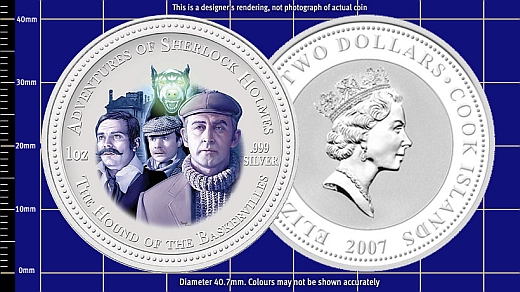
In contrast to gold-, silver- and copper-coloured coins (whatever metal they are made of), simply “coloured coins” sport the colours not usually associated with coinage metals. Or so I think, because so far I could not find any definitive guide to coloured coins. Wikipedia mentions them in an article on commemorative coins. I got interested in the subject since I discovered that the Sherlock Holmes Silver Coins produced by the New Zealand Mint (apparently, the legal tender of the Cook Islands) are graced by the images of Sherlock Holmes and Doctor Watson from Soviet-era films, such as The Hound of the Baskervilles.


The Tony Clayton’s website contains a very useful list of metals used in coins and medals. In particular, I have learned that niobium is used as coinage metal. In 2003, Münze Österreich pioneered the use of niobium for coin manufacturing, issuing a bimetallic €25 coin. According to this review,
The colouring <of the niobium insert> is made by a so called anodic oxidation of the material. With this treatment, by electrochemical processing a very thin niobium oxide layer is formed under controlled conditions. By refraction of light in the oxide layer so called interference colours are created which gives the colouring of the niobium. Depending on the processing parameters, the thickness of the oxide layer can be very well controlled, and gives the niobium its noble appearance. Depending on the thickness of the layer different colours are producible.
For instance, Latvian bimetallic Coin of Time (struck by Münze Österreich) consists of beautiful blue niobium centre enclosed in an outer silver ring. The obverse of the coin features the heraldic rose and the tiny Gothic script letters and standing for Heinrich Rose (1795—1864), discoverer of niobium.

Latvia-Coin of Time (obverse).gifLatvia-Coin of Time (reverse).gif

Wednesday, September 23, 2009

Magnetic monopoles in spin ice

Although the magnetic monopoles were postulated by Paul Dirac in 1931, the existence of these particles remains an open problem. This article surveys the recent breakthrough discoveries concerning magnetic monopoles within spin ice materials, dysprosium titanate (Dy2Ti2O7) and holmium titanate (Ho2Ti2O7).

Monday, September 21, 2009

Sulfimide bond in collagen IV

The recent paper in Science describes the sulfilimine (sulfimide, in IUPACese) bond, “not previously found in biomolecules”, identified in collagen. The bond (>S=N–) cross-links methionine and hydroxylysine residues of adjoining protomers.

Wednesday, September 16, 2009

Stereochemistry of digitonin

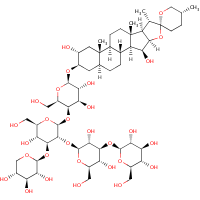
Following the call to the community from Antony Williams, I indulged in some chemical drawing. I did redraw structure 1 from this paper from scratch to get (a). This is very much like structure of digitonin in ChEBI (b), except for methyl group at C-20 which goes up in (a).

20beta-digitonin
(a)
20alpha-digitonin
(b)

Muhr et al. wrote:

With our investigations, it was possible for the first time to confirm beyond all doubt the structure suggested by Tschesche and Wulff for digitonin by means of modern NMR techniques, and to assign all proton and carbon resonances.

Now I was not able to get to the full text of Tschesche and Wulff, but at least their abstract contains the German name “3[β-D-Glucopyranosyl(I)(1→3Galakt.II)-β-D-galaktopyranosyl(II)(1→2Gluc.III)-β-D-xylopyranosyl(1→3Gluc.III)-β-D-glucopyranosyl(III) (1→4Galakt.IV)-β-D-galaktopyranosyl(IV)(1→3-Digitog.)]5α,20βF,25α Spirostantriol(2α,3β,15β)”, which kind of confirms 20β configuration. (The default configuration of spirostan is 20α.)

I guess this still does not answer what the “correct” structure of digitonin is. All we can say that Muhr et al. reported the structure (a).

Friday, September 11, 2009

Charge-shift bonding

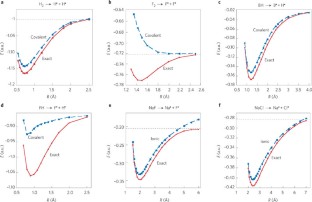
Here’s something one doesn’t see in a chemistry textbook. The recent perspective paper in Nature Chemistry deals with a distinct class of electron-pair bonding called “charge-shift” (CS) bonding, which exists alongside classical covalent and ionic bonding. And in not-so exotic molecules.

<A> striking example is the difference between H2 and F2; two homonuclear bonds that by all criteria should be classified as covalent bonds, but exhibit fundamental differences. Consider the energy curves (Fig. 1) of the two bonds calculated recently. Figure 1a shows that the H—H bond is indeed covalent; its covalent structure accounts for most of the bonding energy (relative to the ‘exact’ curve). By contrast, for the F—F bond in Fig. 1b, the covalent structure is entirely repulsive, and what determines the bonding energy and the equilibrium distance is the covalent–ionic mixing. This mixing leads to a resonance energy stabilization, which we have termed the ‘charge-shift resonance energy’ (RECS). Thus, despite their apparent similarity, the two bonds are very different; whereas the H—H bond is a true covalent bond, the F—F bond is a CS bond that is completely determined by the RECS quantity.

No less striking example is so-called inverted C—C bond in [1.1.1]propellane (described in a paper from the same group of authors), which “closely resembles the single bond of difluorine”.

Tuesday, September 01, 2009

Antarcticite

Antarcticite is a mineral form of calcium dichloride hexahydrate. It was first discovered in Don Juan Pond in Antarctica, which is probably the saltiest (47% w/v) body of water on earth. Looking at crystal structure of antarcticite (below), one can see that both name “calcium dichloride hexahydrate” and formula CaCl2·6H2O are misleading, for there are two kinds of water in it. The structure comprises the alternating layers of (i) trigonal planar triaquacalcium(2+) ions and (ii) water and chloride ions. I suppose it should be named “triaquacalcium dichloride—water (1/3)” or “triaquacalcium dichloride trihydrate”, with formula [Ca(OH2)3]Cl2·3H2O.

anarcticite

Tuesday, August 18, 2009

Deferrochelatase

I always thought that ferrochelatase (EC 4.99.1.1) has an absurd systematic name: “protoheme ferro-lyase (protoporphyrin-forming)”. Why? According to Enzyme Nomenclature,

Lyases are enzymes cleaving C—C, C—O, C—N and other bonds <in other words, any bond> by other means than by hydrolysis or oxidation.

“Protoheme ferro-lyase” implies that the reaction goes in the direction:

protoheme + 2 H+ → protoporphyrin + Fe2+(a)

while ferrochelatase, in fact, catalyses the reverse reaction:

protoporphyrin + Fe2+ → protoheme + 2 H+(b)

Usually, to release iron from protoheme, you have to break it. Heme oxygenase (EC 11.14.14.18) does it by sequential oxidation of heme into the linear tetrapyrrole, biliverdin.

However, this paper demonstrates that there could be another way to do it.

Until today, all known enzymes performing iron extraction from heme did so through the rupture of the tetrapyrrol skeleton. Here, we identified 2 Escherichia coli paralogs, YfeX and EfeB, without any previously known physiological functions. YfeX and EfeB promote iron extraction from heme preserving the tetrapyrrol ring intact. This novel enzymatic reaction corresponds to the deferrochelation of the heme. YfeX and EfeB are the sole proteins able to provide iron from exogenous heme sources to E. coli.

Thus, deferrochelatase catalyses the reaction (a) and, indeed, can be named “protoheme ferro-lyase (protoporphyrin-forming)”.

Thursday, August 13, 2009

What is a correct InChI for chromate?

During the IUPAC International Chemical Identifier (InChI) Subcommittee meeting in Glasgow last month, we touched upon the issue of normalisation of metal complexes. I did not realise before that even simple entity such as chromate(2−), drawn in different ways (a)(c), will give different InChIs. (And different standard InChIs as well; and InChIKeys too.) This is, I am told, because the current InChI algorithm involves “disconnection” of metals before “normalisation”, while it really should do normalisation first. Bother.

[Cr(O)2(O-)2]
InChI=1/Cr.4O/q;;;2*-1
[Cr(O)4]2-
InChI=1/Cr.4O/q-2;;;;
[Cr(2+)(O-)4]
InChI=1/Cr.4O/q+2;4*-1
(a) (b) (c)

Friday, July 17, 2009

Ununbium gets a proper name

With IUPAC officially recognising discovery of element 112, a lot of news articles (such as this one) appeared hailing the “new element”. Of course, only the name copernicium (in honour of Nicolaus Copernicus) is new; the element was discovered in 1996 and was known as ununbium (Uub). The proposed symbol for this metal is Cp, probably not the best choice considering that Cp is widely used as a shorthand for cyclopentadienyl group — imagine we have enough copernicium to synthesise bis(cyclopentadienyl)copernicium, Cp2Cp! Fear not — according to WebElements,

as only a few atoms of element 112 have ever been made (through a nuclear reaction involving fusing a zinc atom with a lead atom) isolation of an observable quantity has never been achieved, and may well never be.

Monday, July 13, 2009

Iron trafficking as an antimicrobial target

The August issue of BioMetals contains proceedings of Symposium on Siderophores held at the ACS Meeting in Philadelphia, 2008. This mini-review caught my attention.

Readers of Biometals are aware of the special challenges posed by the need to acquire iron: an absolutely essential but highly insoluble metal in most biota, and a jealously protected one inside the human body. Microbial systems for Fe uptake and trafficking are consequently highly developed and fundamentally interesting. Limiting Fe under laboratory conditions can be detrimental or lethal, offering a means for limiting microbial growth. The potential for medicinally impeding Fe metabolism is a commonly, if sometimes uncritically, cited justification for in-depth biological studies of Fe acquisition. In fact, derailing the Fe supply train, while plausible as an antimicrobial strategy, is still largely untested in practice.

Since the iron acquisition mechanisms in microbes and higher eukaryotes are fundamentally different, it is possible to deprive the pathogen from iron without harming the host — for instance, by inhibiting the siderophore biosynthesis.

Sunday, June 28, 2009

Metal carbonyls

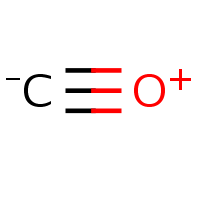
Remember the nitro group? Let us consider even ‘simpler’ case of carbon monoxide. Almost invariably, the chemical databases represent CO as a charge-separated molecule (a) even though it would be as correct to draw it with triple bond and two lone pairs (b). I guess the reason to chose the representation (a) is that the software used for drawing/validating concerns itself with electron accountancy of separate atoms rather than whole molecule.

carbon monoxide with charge separationcarbon monoxide with two lone pairs
(a) (b)

What about metal carbonyls? For instance, hexacarbonylvanadium, drawn with charge separation (c), looks really ugly. On the other hand, the software (e.g. ChemSketch) objects to the representation (d) (which, apparently, is preferred; cf. tetracarbonylnickel on p. 408 of IUPAC Recommendations) because it ‘wants’ the positive charge on triple-bonded oxygen.

hexacarbonylvanadium with charge separationhexacarbonylvanadium without charge separation
(c) (d)

Friday, June 19, 2009

The first viral P450

It’s true: the genome of Mimivirus is bigger than some bacterial genomes, but it is still a virus. Or is it?

When and where I was doing my master’s degree (and that was more than 20 years ago, at the Department of Biochemistry of Medico-Biological Faculty), we were jokingly defining life as “the mode of existence of cytochrome P450”. I’ve always thought that viruses are not alive; therefore, they don’t need P450s. Now, this paper describes the expression of a P450 gene from Mimivirus in E. coli. The CO complex of the expressed protein shows the characteristic absorption spectrum of ‘functional’ P450, but its biological function remains unknown.

Sunday, June 14, 2009

Calcium

‘Calcium’ is the name given by Sir Humphry Davy to the metal that he first isolated by electrolysis in 1808. It is derived from Latin calx (lime) which most likely came from Greek χάλιξ (pebble, limestone). The English word ‘chalk’ is also derived from calx. My inner folk etymologist has successfully linked chalk with ‘calculation’ (via the blackboard, of course), but it seems that the connection is a bit older than blackboard: Latin calculus is simply a ‘little pebble’ used in calculations on an abacus. (Latin for chalk is not calx but creta, thus Cretaceous period.)

Not everything that starts with ‘calcium’ is a calcium compound. For instance, this chapter of Invitrogen’s Guide to Fluorescent Probes and Labeling Technologies contains a section on Calcium Green, Calcium Yellow, Calcium Orange and Calcium Crimson indicators. These compounds, upon binding Ca2+, exhibit a strong increase in fluorescence emission intensity. I suppose the corresponding fluorescent complexes then should be named something like ‘calcium Calcium Crimson’ and so on.

Wednesday, June 03, 2009

Wine metallomics

I suppose everybody who follows this blog is acquainted with the theory linking the lead posoning and decline of Roman Empire. But sure that was a long time ago? Bad news, everybody: the wine we drink now still has the metals we really needn’t. According to this paper,
The THQ <target hazard quotient> values were determined as ranges from previously reported ranges of metal ion concentrations and were frequently concerningly high. Apart from the wines selected from Italy, Brazil and Argentina, all other wines exhibited THQ values significantly greater than one indicating levels of risk. The levels of vanadium, copper and manganese had the highest impact on THQ measures. Typical potential maximum THQ values ranged from 50 to 200 with Hungarian and Slovakian wines reaching 300. THQ values for a sample of red and white wines were high for both having values ranging from 30 to 80 for females based on a 250 mL glass per day.
Well, I’ll stick to Italian (post-Roman) wine then.